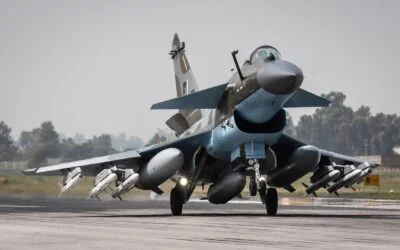
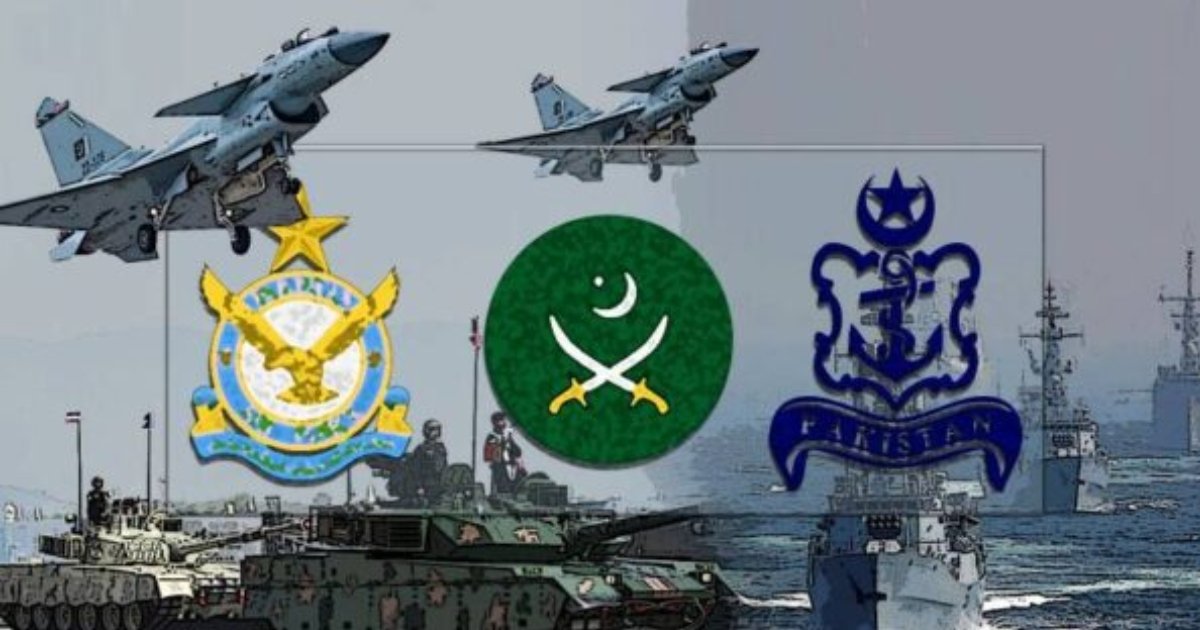
The purchase of the high-end J-10C fighters by Pakistan is part of a broader military modernization initiative. Islamabad is also adding new air, naval, and subsurface platforms to a networked force structure in late 2025. On the maritime front, PNS Khaibar, the second of the Babur-class guided-missile corvettes, was recently commissioned in Pakistan. PNS Khaibar (F-282) is the second ship in a four-ship series built in Turkey under the PN-MILGEM program, following PNS Babur (commissioned Sept 2024). These corvettes integrate long-range anti-ship/cruise missiles, layered air defense, and modern sensors into a stealthy hull. Their construction is based on distributed, networked warfare: each vessel serves as a node connected to maritime surveillance aircraft, submarines, and coastal offensive assets, enabling the projection of denial capabilities throughout the northern Indian Ocean. In practice, Babur-class forces are pushing the Pakistan Navy (PN) to transition from platform-based warfare to a system-of-systems approach, significantly increasing the range of its sea denial and area defense without the need to deploy large carrier forces.
#Breaking: Pakistan Navy’s PNS KHAIBAR sets sail for the first time!
Built at Istanbul Shipyard under ASFAT’s leadership, this marks a historic milestone in 🇵🇰🇹🇷 defense ties. Pakistan’s first Babur-class frigate is already in service with the Pakistan Navy! ⚓
🇵🇰 #PNSKhaibar… pic.twitter.com/SZ6rUR1sKl— International Defence Analysis (@Defence_IDA) May 30, 2025
The United States Department of Defense has confirmed that Pakistan placed an order for 36 Chinese-made J-10C fighter jets, with 20 aircraft already delivered to the Pakistan Air Force.
The remaining jets are expected to be delivered in phases. The induction of the J-10C, a… pic.twitter.com/49WdcqqTPG
— Pakistan Narrative (@narrative_pk) December 27, 2025
The other pillar of modernization is the development of Pakistan’s submarine fleet. Four new Type-039B (S-26 or Hangor-class) submarines have been constructed abroad under a 2015 agreement with China. They are currently in sea trials, and the PN Chief has said they will come into service in 2026, joining the fleet in rapid succession to provide an immediate increase in undersea capability. These Hangor-class vessels (with Air-Independent Propulsion) will provide Pakistan with an effective second-strike capability at sea, extending well into the Arabian Sea. They are combined with torpedo-carrying drones and coastal missiles to complement Pakistan’s anti-access/area-denial (A2/AD) posture.
🚨🇵🇰 BREAKING: Pakistan Navy has launched its fourth Hangor class submarine, PNS Ghazi, in Wuhan, China.
This is the final submarine built in China out of eight ordered. The remaining boats will be constructed in Pakistan under a technology transfer program.
⚓ PNS Ghazi has… pic.twitter.com/eeTI7e9ajn
— Defence Index (@Defence_Index) December 17, 2025
Air Force Upgrades, Indigenous Platforms
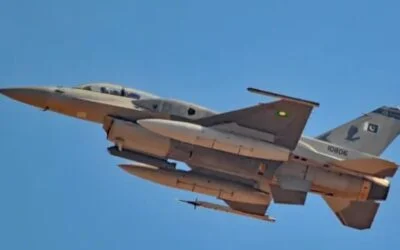
Modernization is also progressing on land and in the air. In addition to J-10Cs, Pakistan is modernizing older fighters: Pakistan has accepted a U.S. package worth $686 million to modernize its F-16 fleet (adding Link-16 datalinks, encrypted IFF Mode 5, and life-extension improvements). This will make Pakistan’s F-16s combat-relevant and interoperable with partner forces well into the 2030s, consistent with Islamabad’s multi-vector procurement strategy. In the meantime, the indigenously developed JF-17 Thunder of Pakistan has reached Block-3 status with AESA radar and improved weapons, and it even has a foreign buyer, a testament to the ever-expanding defense industry of the country.
US President Donald Trump’s administration has approved sales valued at $686 million of technology and equipment for Pakistan’s F-16 fighter jets to modernize its fleet https://t.co/QiMGjsvFH1
— Bloomberg (@business) December 11, 2025
The other highlights of the late-2025 force upgrade of Pakistan include:
- Naval Drones and Sensors: Pakistani companies presented new uncrewed sea systems at the 2025 Pakistan International Maritime Expo. These include surface drones (USVs), such as the autonomous patrol boat Muhassir, which carries ISR sensors and light arms, and a maritime variant of the Shahpar UAV. The PN has specifically adopted uncrewed systems across surface, subsurface, and air capabilities as part of a future fleet. These drones will expand Pakistan’s surveillance range and strike radius at sea in a cost-effective manner.
- Shipbuilding and Indigenous Design: The second-hand vessel in Pakistan is being replaced by locally built vessels. As of November 2025, the PN signed an agreement with Karachi Shipyard to construct the first Jinnah-class frigate, a new 3,300-ton design based on a joint Pakistani-Turkish design. The Jinnah frigate will be commissioned in 2027-28, strengthening the blue-water fighting fleet of Pakistan. Meanwhile, two Babur-class corvettes are being built in Karachi, with technology transferred by Turkey. Such measures not only accelerate the expansion of the fleet but also enhance shipbuilding capacity in Pakistan.
- Strategic Partnerships: China and Turkey remain major partners. The procurement of the J-10C, Hangor submarines, and associated Chinese technology falls under extensive Sino-Pak strategic alliances. Likewise, the Babur-class corvettes and the Jinnah-class frigate programs, being headed by the ASFAT of Turkey, highlight a reliable Pak-Turk industrial alliance. These collaborations have become part of signaling foreign policy because of high-profile ceremonies (including President Erdogan at the Khaibar commissioning). Pakistan is also using international partnerships to receive advanced technology and co-produce modern platforms on favorable terms.
At a ship delivery ceremony held at the İstanbul Naval Shipyard Command, the MILGEM corvette PNS Khaibar was officially handed over to Pakistan marking yet another milestone in bilateral defense cooperation.
Addressing the ceremony, H.E. President Recep Tayyip Erdoğan… pic.twitter.com/vlRJq8TIXe
— Türkiye in Pakistan (@TC_IslamabadBE) December 20, 2025
All these modernization initiatives boost Pakistan’s national security and force projection. This combination of a modern jet fleet and networked naval resources will ensure that Islamabad can defend its airspace and sea communication lines. An example is that the Pakistani counter-drones can detect long-range threats on the Indian Ocean with more competent fighters and drones able to patrol the sea, securing major shipping routes into the Arabian Sea. These new submarines and corvettes act as a deterrent layer: every hostile action against the coasts or naval forces of Pakistan would now be met by anti-ship missiles, torpedo attacks, and naval mines.
Indigenous Shipbuilding, Strategic Partnerships, and Deterrence Logic
Importantly, Pakistan also portrays the following measures as defensive and stabilizing. Admirals and defense authorities focus on deterrence; the intention is to discourage enemies by being powerful, not to dominate them. Instead, by seeking rather cheap sources (Chinese jets, co-produced corvettes, unmanned systems), Pakistan does not engage in an unsustainable arms race. Such A2/AD capabilities are defensive in nature, many analysts observe: they increase the cost of aggression, but they do not compel Pakistan to set up far-flung bases.
In the larger South Asia context, the modernization of Pakistan is an adaptation to changing threats. Emerging Indian naval carriers, Chinese activity in the IOR, and the development of Indian missiles all encourage Islamabad to modernize its own forces. By the end of 2025, the armed forces of Pakistan will have shifted to a more networked, tech-savvy force positioning. According to one analyst, Pakistan now engages in war less in terms of fleet size and more in terms of integrated and precision-enabled warfare. This implies that a smaller force can gain deterrence parity via superior systems integration.
The recent advances in the defense sector of Pakistan, in terms of the J-10C jets, Babur-class frigates (and others), are the outcomes of a conscious modernization program. Being based on the credibility of alliances and domestic initiative, they contribute to the strength of Islamabad in defending its land and creating a deterrent force at sea. The impact of this on regional stability is twofold: on the one hand, India is getting a more serious adversary, and on the other, the overall effect is a more effective mutual deterrent, which, according to some experts, deters the development of war by making sure that no one has a decisive advantage. The leaders of Pakistan claim that these balanced upgrades are beneficial to national security by maintaining deterrence and by adding, via exercises and dialogue, to a balanced power in South Asia.