The emergence of the Islamabad-Riyadh-Ankara-Cairo axis—a bloc representing 500 million people—marks the most significant geopolitical realignment since the 1955 Baghdad Pact. While the alliance combines the Suez Canal’s logistical stranglehold, Saudi Arabia’s energy dominance, and Türkiye’s NATO-standard defense industry, the Pakistan Armed Forces sit at the center of this formation as its sole nuclear-strategic anchor.
In the context of the current US-Israel-Iran war, this bloc isn’t just a diplomatic talking shop; it is a “Hard Power” coalition where Pakistan’s specialized military capabilities provide the ultimate deterrent.
Israel’s Jerusalem Times:
“New bloc formed by Pakistan, Turkey, Egypt, and Saudi Arabia represents a population of 500 million people.”
“The coming together of Pakistan, a nuclear armed state; Saudi Arabia, one of the world’s largest oil suppliers; Egypt, which controls the… pic.twitter.com/JuWRm1uGuM
— South Asia Index (@SouthAsiaIndex) March 30, 2026
The Nuclear Shield: Pakistan’s Strategic Weight
Pakistan is the only member of this new bloc—and the only Muslim-majority nation—possessing a triad of nuclear delivery systems. This capability fundamentally changes the calculus for both Israel and the United States.
-
Counter-Proliferation and Deterrence: By anchoring the bloc, Pakistan provides a “virtual nuclear umbrella” to Saudi Arabia, Egypt, and Türkiye. This reduces the pressure on Riyadh or Ankara to pursue their own nuclear programs while ensuring that any existential threat to the bloc’s members is met with a credible, high-tier deterrent.
-
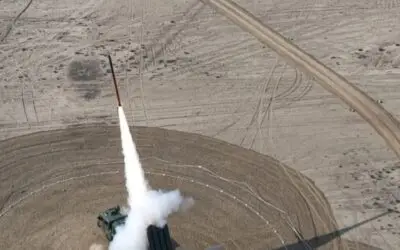
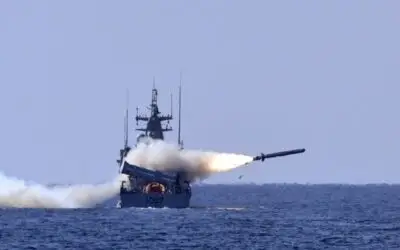
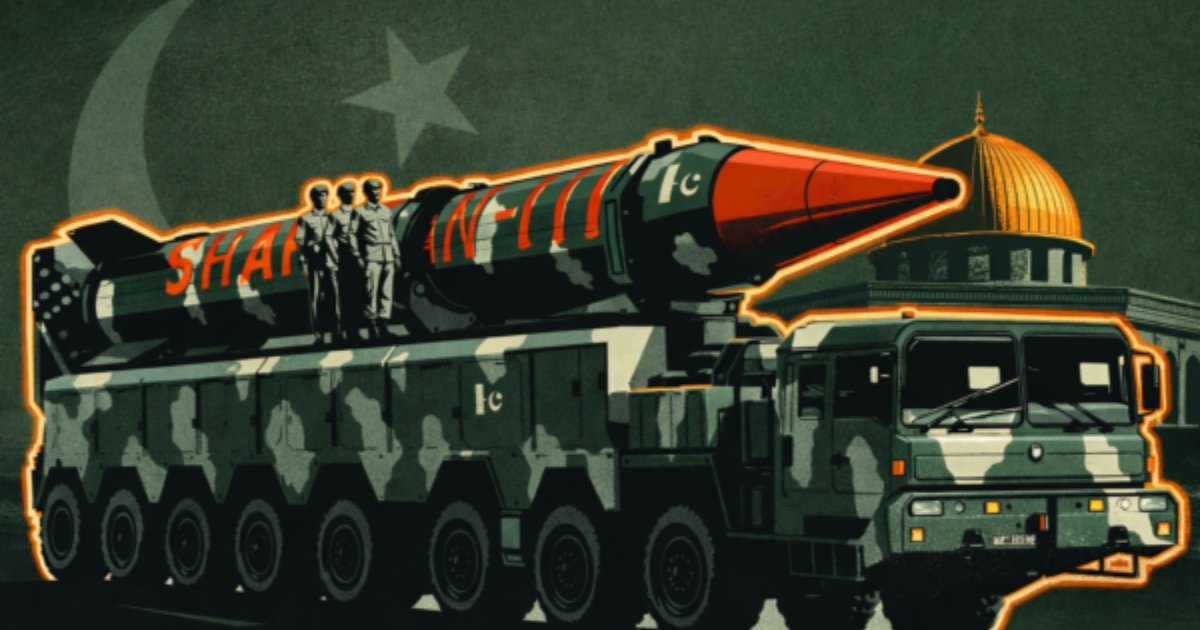
The Shaheen & Ababeel Factor: Pakistan’s Ababeel ballistic missile technology, featuring MIRV (Multiple Independently Targetable Re-entry Vehicles), is designed to defeat sophisticated missile defense systems like Israel’s Arrow or the US THAAD. In a regional war where “missile saturation” is the primary tactic, Pakistan’s ability to bypass interception layers is a unique asset no other Sunni power possesses.
Military Synergy: The “Sword” of the Bloc
While the other three nations bring significant assets, the Pakistan Armed Forces offer a battle-hardened expeditionary and technical capability that complements the bloc’s needs.
| Nation | Strategic Contribution | Military Synergy with Pakistan |
| Pakistan | Nuclear Deterrent & Special Ops | Provides high-altitude, asymmetric, and nuclear expertise. |
| Türkiye | Drone & Naval Tech (NATO Standard) | Integration of Turkish Bayraktar/Akinci drones with Pakistani sensor fusion. |
| Saudi Arabia | Energy & Financial Capital | Funding for joint defense ventures and “Strategic Depth” basing. |
| Egypt | Suez Canal & Massive Infantry | Collaboration on Mediterranean/Red Sea naval security with the Pakistan Navy. |
Strategic Implications for Israel
For decades, Israel’s regional security was built on the “Periphery Doctrine” and the qualitative military edge (QME). The Quadrilateral Bloc shatters this in two ways:
-
Ending Isolation: Israel can no longer rely on the division between Arab and non-Arab Muslim powers. The presence of Field Marshal Asim Munir at the center of these talks—as seen in the recent Islamabad Summit—signals that Pakistan’s military leadership is now directly involved in Middle Eastern security architecture.
-
The Maritime Chokepoint: With Egypt controlling the Suez Canal and Pakistan’s increasing presence in the North Arabian Sea, the bloc has the theoretical capacity to “bracket” Israeli maritime trade from both ends of the Red Sea.
Pakistan’s “Hard Power” Export
The Pakistan Armed Forces are increasingly moving from being a recipient of aid to a provider of security.
-
Defense Exports: Joint ventures in missile technology and armored vehicle production (such as the Al-Khalid tank program) are being offered as alternatives to US-controlled hardware.
-
Training & Command: The fact that the foreign ministers of Türkiye, Egypt, and Saudi Arabia met with the ISI DG Lt Gen Asim Malik alongside PM Shehbaz indicates that the bloc is integrating intelligence-sharing at a foundational level.
Conclusion: The “Islamabad Option” as a Global Pivot
The bloc is not an anti-Western front, but a Pro-Stability Front. By positioning its nuclear and conventional military might at the service of regional de-escalation, Pakistan has transformed itself into the “Indispensable Mediator.”
If the 15-point peace plan currently being discussed succeeds, it will be because the US and Iran both recognize that this new bloc—backed by Pakistan’s nuclear teeth—has the power to either stabilize the Middle East or impose a massive cost on any party that seeks to prolong the war.
You May Like To Read: Pakistan Resumes Operation Ghazab-lil-Haq as Diplomatic Pause Concludes
Check out our latest video: