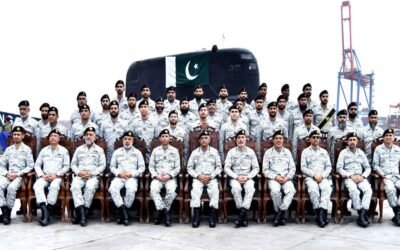
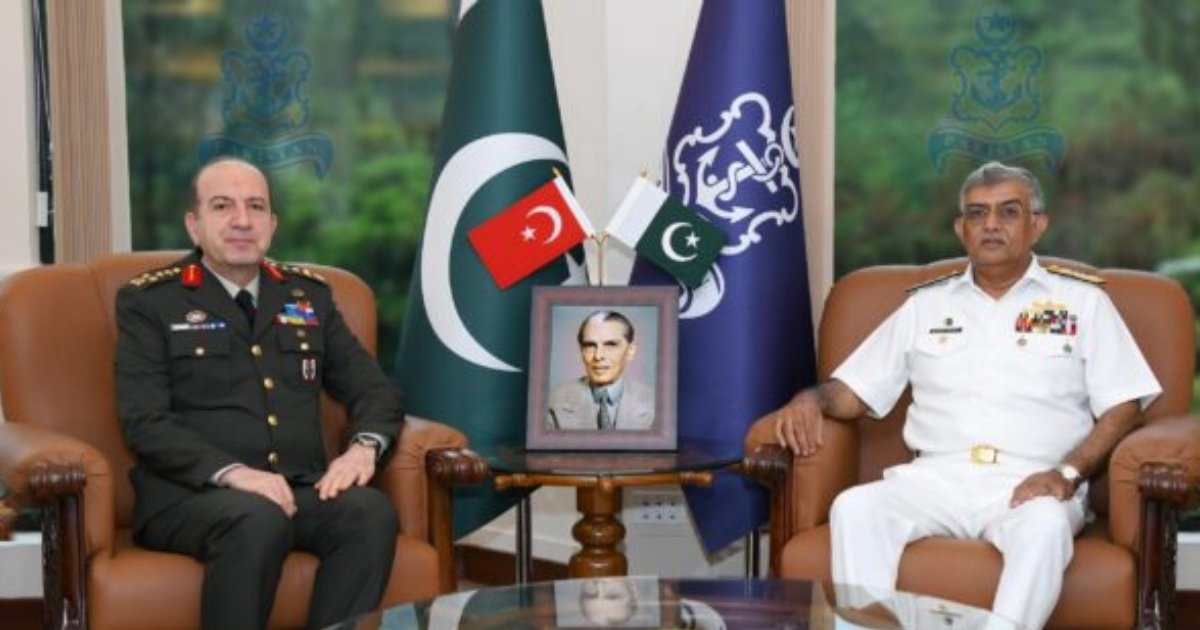
As the world turns its eyes to the upcoming Islamabad Talks, the strategic military alignment between Pakistan and Türkiye continues to deepen. General Levent Ergün, Deputy Chief of General Staff of the Turkish Armed Forces, called on the Chief of the Naval Staff (CNS), Admiral Naveed Ashraf, at Naval Headquarters (NHQ) today.
The high-level meeting underscores the “unshakeable” maritime partnership between the two nations as they navigate the security fallout of the US-Israel-Iran conflict.
Both sides discussed maritime security environment amid Iran Israel US conflict and enhancing cooperation in training and joint exercises. Visit reflects deep rooted Pakistan Turkiye strategic partnership and shared resolve for maritime peace and stability. 2/2 pic.twitter.com/e53XXvd00R
— DGPR (Navy) (@dgprPaknavy) April 7, 2026
Navigating the Storm: Maritime Security
The primary focus of the discussion was the increasingly volatile maritime environment in the North Arabian Sea and the Strait of Hormuz.
-
The “Hormuz” Protocol: Following the recent ceasefire and the reopening of the Strait, both leaders discussed the necessity of maintaining a “coordinated presence” to prevent asymmetric threats from disrupting the newly restored global supply chains.
-
Regional Stability: Admiral Ashraf and General Ergün reaffirmed their shared resolve to ensure that the vital sea lines of communication (SLOCs) remain open and safe for international trade.
Enhancing Combat Readiness
Building on the success of previous joint maneuvers like the Mavi Balina and Ayyildiz exercises, the leaders agreed to:
-
Expanded Training: Increasing the exchange of officers and technical expertise between the two navies.
-
Joint Exercises: Planning for upcoming bilateral maritime drills that focus specifically on Air Defence and Anti-Submarine Warfare—capabilities that have proven critical during the recent regional air war.
-
Technical Cooperation: Discussing professional matters related to naval hardware and indigenous defense production.
Analysis: The “Ankara-Islamabad” Anchor
This visit is more than a routine diplomatic call; it is a signal of the “Islamabad Option” in action.
-
The Third Pillar: As Pakistan mediates between Washington and Tehran, Türkiye—a NATO member with deep ties to the Islamic world—acts as a critical “third pillar” of stability.
-
Interoperability: The strategic partnership reflects a shift toward a more autonomous regional security architecture, where Pakistan and Türkiye provide the naval “muscle” to protect CPEC and Middle Eastern maritime interests without relying solely on extra-regional powers.
You May Like To Read: CDF FM Asim Munir met Iranian FM Abbas Araghchi in Islamabad
Check out our latest video: