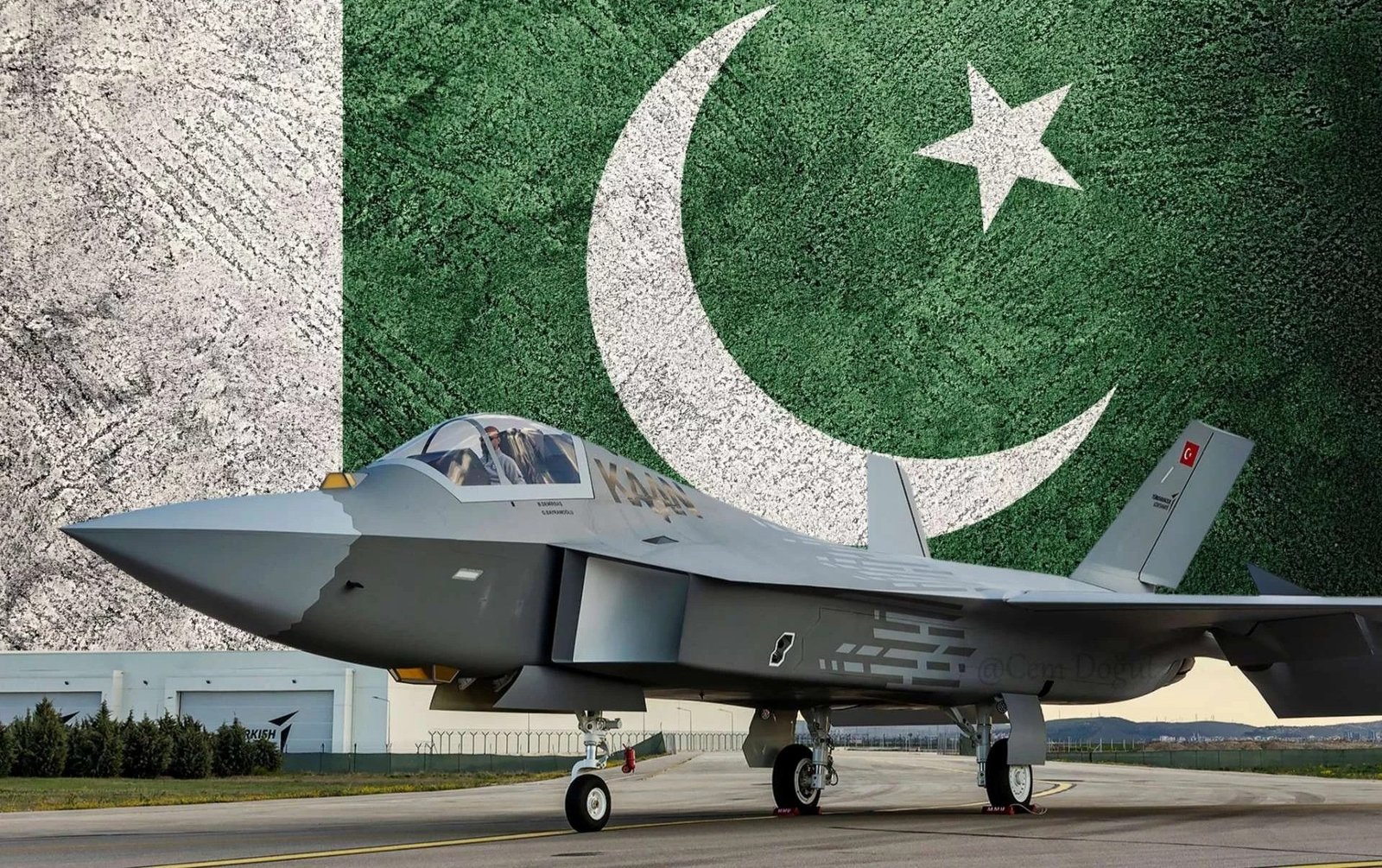
Pakistan is set to significantly strengthen its air power through deeper collaboration with Turkey on the fifth-generation KAAN fighter jet programme.
Pakistan Air Force to Receive Advanced KAAN Stealth Fighters Ahead of Schedule – https://t.co/TliJ0Q5mZb pic.twitter.com/MT10Qag2CS
— Times of lsIamabad (@TimesofIslambad) April 9, 2026
TUSAŞ CEO Mehmet Demiroğlu has announced accelerated timelines for the KAAN project, bringing forward first deliveries by two years. He stated that KAAN aircraft will appear in the skies within a few months, while four to six prototypes undergo intensive testing over the next two years. Mass production is continuing in parallel, with initial deliveries now targeted for the end of 2028 or the first quarter of 2029.
This marks a notable advancement from earlier projections, which had placed the start of full-scale production around 2030. Industry observers attribute the faster pace to rapid progress in systems integration, structural testing, and supply chain development. Prototypes P1 and P2 are currently entering rigorous flight testing regimes, including high-altitude, supersonic, and high-G manoeuvres.
Pakistan has been deeply involved in the KAAN (also known as TF-X or MMU) programme for several years. Nearly 200 Pakistani engineers have contributed to its development. Bilateral agreements include plans for a joint production facility in Pakistan, positioning the country not just as an end-user but as a key manufacturing partner.
The KAAN is a twin-engine stealth fighter designed for air superiority missions. It features advanced low-observable technology, internal weapon bays, and indigenous sensors. Demiroğlu emphasised that only four countries currently possess fifth-generation combat aircraft capability, highlighting the strategic importance of the programme for both Turkey and its partners.
For the Pakistan Air Force, participation in the KAAN project represents a major leap towards acquiring modern fifth-generation capabilities. The accelerated timeline and plans for local production are expected to enhance Pakistan’s long-term defence self-reliance and deepen its strategic partnership with Turkey.
The development was highlighted during high-level defence cooperation discussions, including at recent Pak-Turkish Industrial Expos.