Pakistan’s armed forces spent the past week fighting on three fronts at once: a grinding counter-terrorism campaign in Khyber Pakhtunkhwa and Balochistan, a tense naval standoff with India in the North Arabian Sea, and a diplomatic push to keep the world’s attention on cross-border terrorism from Afghanistan. Below is a full roundup of the ISPR releases, Army and Air Force developments, and the wider defense news that shaped the week.
Counter-Terrorism Operations
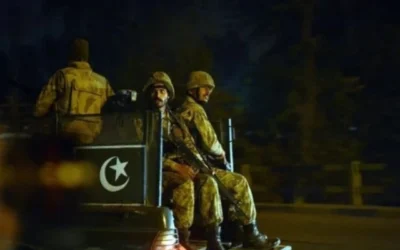
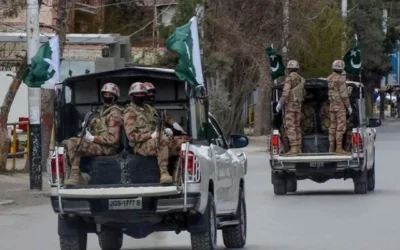
The Pakistan Army’s Inter-Services Public Relations wing issued a steady stream of updates this week, each one a reminder of how much of the country’s defense effort is now absorbed by the fight against Indian-sponsored proxies operating out of Khyber Pakhtunkhwa and Balochistan.
On 14 September, they struck a Fitna al-Hindustan cell in Balochistan’s Mastung district in their biggest operation at one go. Radio Pakistan and the government’s radio, ISPR, reported 03 terrorists, including a commander named Naqib, were killed. The killing of a named commander along with foot soldiers suggests intelligence agents have been working on the network for a while, and this wasn’t just a one-off raid.
Security forces carried out a successful operation against Fitna al-Hindustan in #Mastung district, killing three terrorists, including terrorist commander Naqib@OfficialDGISPR #News #RadioPakistanhttps://t.co/5YXDa5UWWB pic.twitter.com/GlRLaBYhSw
— Radio Pakistan (@RadioPakistan) September 14, 2026
Days later, on September 17, security forces reported another successful intelligence-based operation (IBO) in the Badrang area of Awaran district, also in Balochistan, killing three more terrorists. Officials said the group had suffered a string of losses in the province over recent weeks, and vowed operations would continue “until the last terrorist was eliminated.” This built on an earlier engagement just before the review period, when eleven terrorists were killed in twin operations in Kharan and Washuk districts on September 6 and 7 — including eight militants intercepted while trying to set up a roadblock to disrupt local traffic, and a further three neutralized in a hideout raid a day later. Nearly three tonnes of explosive material, evidently intended for improvised explosive devices, was recovered in that operation alone.
Three terrorists were killed and a large quantity of weapons and ammunition recovered during intelligence-based operations in Balochistan under Operation Radd-ul-Fitna 3. Security sources say the killed terrorists were affiliated with Fitna al-Hindustan.#Pakistan #Balochistan… pic.twitter.com/XBywKygNUW
— Pakistan TV (@PakTVGlobal) September 17, 2026
These figures fit a pattern that has held for most of 2026. According to a recent report from the Center for Research and Security Studies (CRSS), Khyber Pakhtunkhwa and Balochistan together accounted for roughly 96 percent of all violence-related fatalities recorded nationally in the second quarter of the year, with KP alone responsible for well over 60 percent of the toll. Balochistan, meanwhile, recorded the highest concentration of individual attacks after KP, at around a third of the national total. The province’s exposure to Fitna al-Hindustan — Islamabad’s designation for India-backed separatist and terrorist networks operating there — remains the central preoccupation of Southern Command and the Frontier Corps.
Chief of Army Staff and Chief of Defense Forces Field Marshal Syed Asim Munir has been closely following the province throughout September. Earlier in the month, he visited Quetta Garrison and held security briefings with field commanders to assess operational readiness and to encourage greater coordination between the Army, police and civilian government. He continues to stress the need for institutions to work together in the public domain. This implies that the GHQ realizes that military action alone will not end the insurgency in Balochistan without simultaneously tackling the issues of governance and development in the province.
Field Marshal Munir’s Diplomatic Calendar
Away from the battlefield, the Army chief kept up a heavy schedule of defense diplomacy at General Headquarters in Rawalpindi this week, underlining how central military-to-military relationships have become to Pakistan’s foreign policy.
#ISPR Official Press Release
Admiral Dr Muhammad Ali, Chief of the Indonesian Navy, called on Field Marshal Syed Asim Munir, NI (M), HJ, Chief of Army Staff and Chief of Defence Forces (COAS & CDF) of Pakistan at GHQ, Rawalpindi.
During the meeting, matters of mutual interest,… pic.twitter.com/jbr785UUVt
— Pakistan Armed Forces News 🇵🇰 (@PakistanFauj) September 14, 2026
On September 14, Indonesian Navy chief Admiral Dr Muhammad Ali called on Field Marshal Munir, with both sides discussing regional security and ways to deepen bilateral defense cooperation. The same day, Lebanon’s Interior Minister Ahmad Al Hajjar also met the Army chief, with ISPR noting discussion of stronger institutional linkages between the two countries’ security establishments; Al Hajjar, for his part, acknowledged the professionalism of Pakistan’s armed forces and their record in counter-terrorism.
Lebanese Interior Minister Ahmad Al Hajjar and Field Marshal Syed Asim Munir discuss regional security, bilateral relations and enhanced cooperation between Pakistan and Lebanon in the security domain.#PakistanLebanon #AhmadAlHajjar #AsimMunir #RegionalSecurity #PakistanTV pic.twitter.com/EFwDAVn09O
— Pakistan TV (@PakTVGlobal) September 14, 2026
Two days later, on September 16, a delegation from POWERUS — a US-based defense and critical infrastructure firm led by Robert Bret Velicovich — met FM Munir at GHQ to discuss emerging defense technologies and potential cooperation in procurement, production, and capacity building. Munir used the meeting to stress the importance of technological innovation for national resilience, a message that has become something of a constant refrain in his engagements with foreign defense industry visitors this year.
#ISPR Press Release
A delegation of POWERUS, called on Field Marshal Syed Asim Munir, NI (M), HJ, Chief of Army Staff and Chief of Defence Forces (COAS & CDF) at GHQ, Rawalpindi, Pakistan
POWERUS is a US-based company specialising in defence and critical infrastructure… pic.twitter.com/4KrSsz3Pa4
— Pakistan Armed Forces News 🇵🇰 (@PakistanFauj) September 16, 2026
Taken together, these meetings extend a busy month of defense outreach that has already included high-level contacts with Saudi Arabia and Türkiye under the Makkah Joint Defense Agreement, and continuing shuttle diplomacy with Iran. Pakistan’s defense establishment appears to be leaning hard into building a diversified web of security partnerships — from the Gulf to Southeast Asia to Washington-based industry — at a time when its immediate neighborhood, both east and west, remains volatile.
Pakistan Navy: Collision in the Arabian Sea
The week’s most closely watched story internationally involved the Pakistan Navy, after a vessel from its fleet collided with an Indian warship in the North Arabian Sea on the evening of September 15.
The ship was PNS Hunain (F-273), a Yarmook-class offshore patrol vessel built by the Dutch company Damen and commissioned into the Pakistan Navy in July 2024. Indian news media say the ship of about 2,600 tons was moving fast when it struck another ship in international waters. The ship was badly damaged and had to be towed back to port for repairs. The Indian ship, which was on routine surveillance patrol in the area, was said to have been undamaged.
The INS Kolkata was observed by Pakistan Navy ISR assets returning to harbor after collision with PNS Hunain, with reports indicating significant port-side hull damage requiring 2–3 months of repairs.
Below is footage of PNS Hunain operating in the Arabian Sea. pic.twitter.com/u0lIzBeRP9
— Mohsin Ali (@Mohsin_o2) September 16, 2026
India’s Ministry of External Affairs responded quickly by directing its own Charge d’Affaires in Islamabad to file an official protest with Pakistan’s Foreign Ministry and asking Pakistan’s Charge d’Affaires in New Delhi to do the same. New Delhi said the behavior of the Pakistani ship was unsafe and unprofessional. It also claimed it violated Article 10 of the India-Pakistan Agreement of 1991 that called for military exercises and troop movements at sea to be announced in advance. At the time of writing, neither Pakistan’s Navy nor its Foreign Office had released a full public account of what happened; the two sides are still arguing over the facts.
The collision landed in the middle of an active month for the Pakistan Navy more broadly. Karachi has been hosting Exercise SEASPARK-2026 since early September, a large multi-domain drill integrating surface ships, submarines, aircraft, unmanned systems, Marines, and special forces alongside elements of the Army and Air Force — evidence of how far Pakistan’s naval doctrine has shifted toward genuinely joint, multi-domain operations rather than a purely surface-fleet posture. The Navy has also continued to lean on its submarine modernization program, with the first Hangor-class boat, built with Chinese assistance, having entered service earlier this year and three more expected to follow before the decade is out.
You May Like To Read: Field Marshal Issues Stern Warning to Adversaries on Marka-i-Haq Anniversary
Pakistan Air Force: Holding the Line
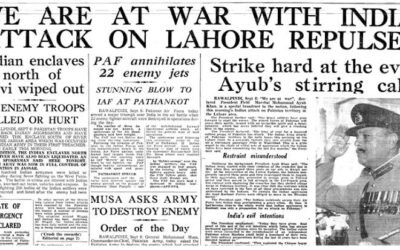
The Air Force’s most prominent moment this month came just ahead of the review period, on September 7, when Pakistan marked Air Force Day with ceremonies across the country honoring the PAF’s role in the 1965 war and, more recently, in last year’s Marka-e-Haq confrontation with India. Prime Minister Shehbaz Sharif used his message on the occasion to praise the force’s “combat prowess and professional excellence,” crediting bold leadership and tactical planning for the outcome of the May 2025 clash, in which the PAF claims to have downed six Indian aircraft — a claim India has continued to dispute.
PAKISTAN AIR FORCE OBSERVES 7TH SEPTEMBER AS MARTYRS’ DAY pic.twitter.com/jfH0DY2IzJ
— DGPR (AIR FORCE) (@DGPR_PAF) September 7, 2026
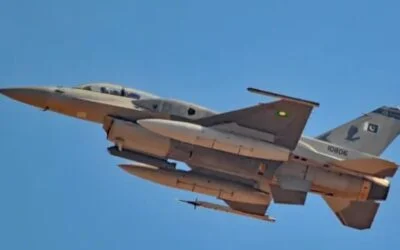
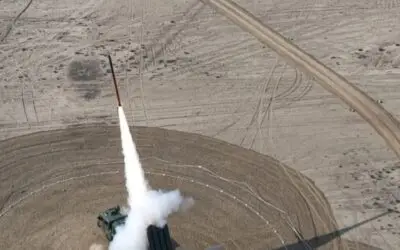
That posture of quiet modernization carried into the following days. Earlier in September, the PAF released promotional material confirming the acquisition of the Chinese HQ-17AE mobile short-range surface-to-air missile system, mounted on a 6×6 Dongfeng chassis and capable of tracking two dozen targets and engaging four simultaneously. Integrated with Turkish Korkut and Sahin air-defense systems already in service, the HQ-17AE effectively tightens the inner ring of Pakistan’s ground-based air defense umbrella, particularly around forward air bases and mobile army formations. Pakistan has not disclosed how many units it has purchased.
🇵🇰🇨🇳 FIRST APPEARANCE: PAF’s HQ-17
China’s HQ-17 short-range air-defence system has made its first public appearance with the Pakistan Air Force.
The mobile system adds another layer of protection against low-altitude aerial threats.#PAF #Pakistan #HQ17 #China #AirDefense pic.twitter.com/kG6UrQAcLn
— International Defence Analysis (@Defence_IDA) September 6, 2026
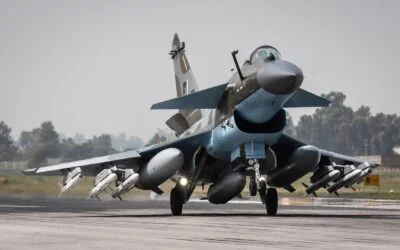
The Air Force’s broader modernization path—ongoing acquisitions of J-10CE fighters, upgrades to the JF-17 fleet, and early discussions of the fifth-generation Shenyang J-35AE—is not a weekly story, but it does influence how much Pakistan’s regional rivals take its deterrent posture seriously, especially as India advances its own long-range missile program.
Afghanistan Border and the United Nations
The most consequential diplomatic moment of the week came at the United Nations, where Pakistan’s Permanent Representative, Ambassador Asim Iftikhar Ahmad, addressed the Security Council on September 16 over the deteriorating security situation linked to Afghanistan. Ahmad warned that Islamabad would “respond in self-defense, as and when needed and in accordance with international law” to terrorism emanating from Afghan soil, and said Pakistan would not “sit idle in the face of this terrorist onslaught.”
The statement reflects the unresolved tension that has defined Pakistan-Afghanistan relations for much of 2026, following border clashes earlier in the year that killed dozens of soldiers and civilians on both sides and briefly escalated into direct strikes on Afghan territory. While the frontier has been comparatively quieter in recent weeks than it was in February and March, Islamabad’s message to the Security Council makes clear that Pakistan sees the underlying threat as unresolved: Kabul’s Taliban administration, in the Pakistani government’s assessment, has yet to meaningfully curtail Tehreek-e-Taliban Pakistan’s ability to operate, train, and stage attacks from Afghan territory. Ambassador Ahmad’s remarks were also notable for coming the same day Pakistan’s UN mission separately raised the alarm over the humanitarian toll of the broader instability in the region.
The Week in Perspective
Put together, the week captures the layered nature of Pakistan’s current security challenge. On the ground, the Army and allied law enforcement agencies are engaged in what has effectively become a permanent counter-insurgency campaign, absorbing near-daily casualties among both militants and security personnel across two provinces. At sea, an unplanned collision with an Indian warship has opened a new and unresolved diplomatic flashpoint, coming just months after the two navies’ last major confrontation. In the air, quiet but steady modernization continues, aimed as much at deterrence as at any specific threat. And at the diplomatic level, Pakistan is simultaneously courting new defense partnerships from Jakarta to Washington while pressing its case at the UN Security Council over what it regards as an unaddressed terrorist sanctuary next door.
None of these threads is new by itself. What the past week shows is how tightly they now run together — a reminder that for Pakistan’s defense establishment, there is rarely such a thing as a quiet week.
This roundup draws on statements from the Inter-Services Public Relations (ISPR), and reporting from Dawn, The Express Tribune, The News, Radio Pakistan, The Nation, Arab News, and other outlets covering the period September 10–17, 2026.
You May Like To Read: Navy War College seminar commemorates one-year anniversary of Marka-e-Haq