Karachi, the economic hub of Pakistan and its largest city, suffered throughout the 2000s and halfway into the 2010s under the weight of a deadly mix of ethno-political rivalries. This involved criminal gangs as well as terrorist militant groups. By the early 2010s, Karachi was faced with an unprecedented crisis that involved daily targeted killings, widespread extortion, and an exploding crime economy. The year 2013 alone experienced more than 3,250 deaths related to violence. This was a dark sign of the city’s gradual deterioration into anarchy. This condition of urban warfare called for a strong, state-initiated intervention that led to the introduction of the historic security campaign known simply as the ‘Karachi Operation.’
Source:sindhpolice
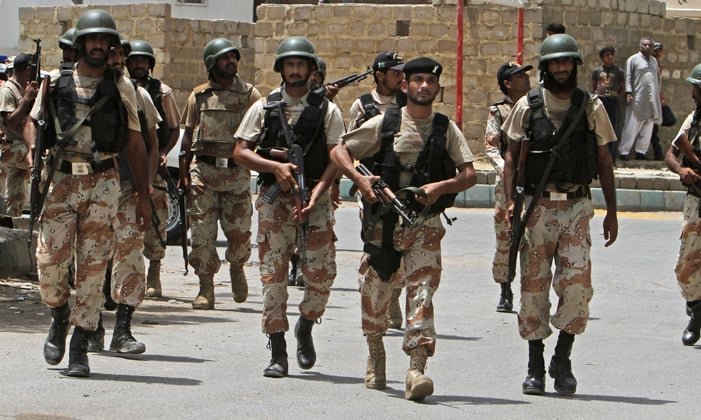
The move to initiate the operation was made on September 4, 2013, when the federal government made a formal decision to authorize the paramilitary Sindh Rangers to spearhead a targeted operation, along with the assistance of the police and the intelligence agencies. Its initial stated goal was not a wholesale military action but a targeted operation aimed at four particular heinous crimes: target killing, kidnapping for ransom, extortion, and terrorism. This mandate represented a significant change in Pakistani security policy. It marked an acknowledgment that political militancy and organized crime were closely interconnected and drove a huge ‘crime economy’ that sustained the violence.
Phase I: Targeting the Hybrid Threat (2013-2015)
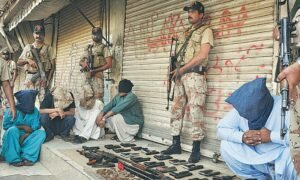
The first phase of the operation targeted the intense destruction of the militant arms of influential political parties, most notably the Muttahida Qaumi Movement (MQM), that had traditionally wielded power through armed groups. At the same time, the Rangers targeted infamous criminal gangs, most notably the Lyari gangs, that had made huge areas of the city no-go zones. Such a strategy was premised upon breaking the command-and-control networks of political and criminal groups. It was crucial to reinstate state control.
Source: Dawn
The character of the urban landscape was different and not at all suited for full-fledged military operations. It was a congested, multi-ethnic, and politicized cityscape that made the operation different from classic counterinsurgency wars waged in rural or tribal territories. It was an intricate type of urban warfare, where boundaries between political activists, criminals, and terrorists were constantly blurred. The government empowered the Rangers with special policing and investigation powers. This was a controversial but much-needed step designed to bypass an ineffective and politicized local police and judicial system.
You May Like To Read: Strategic Triumph of Pakistan Navy, Operation Dwarka of 1965
Phase II: Escalation and Counterterrorism (2015-2018)
The scale of the operation widened substantially after the tragic Army Public School attack in Peshawar on 16 December 2014, which resulted in the development of the National Action Plan (NAP). The national strategy pulled the Karachi Operation more solidly into Pakistan’s overall counterterrorism effort. The emphasis grew more intense on key transnational terrorist groups, such as the Tehreek-i-Taliban Pakistan (TTP) and Al-Qaeda. Both of these groups had entrenched themselves in Karachi and had developed sleeper cells and financing networks in the city.
The Rangers and Counter-Terrorism Department (CTD) launched decisive raids against these high-value targets by shattering their infrastructure and supply lines. The urban terrain became a battleground for intelligence-led operations. They made use of advanced surveillance and targeted arrests to neutralize key operatives embedded within Karachi’s bustling neighborhoods. This phase extended through 2018. It saw the most significant erosion of terrorist networks in the city’s history.
The Outcome: A City Transformed
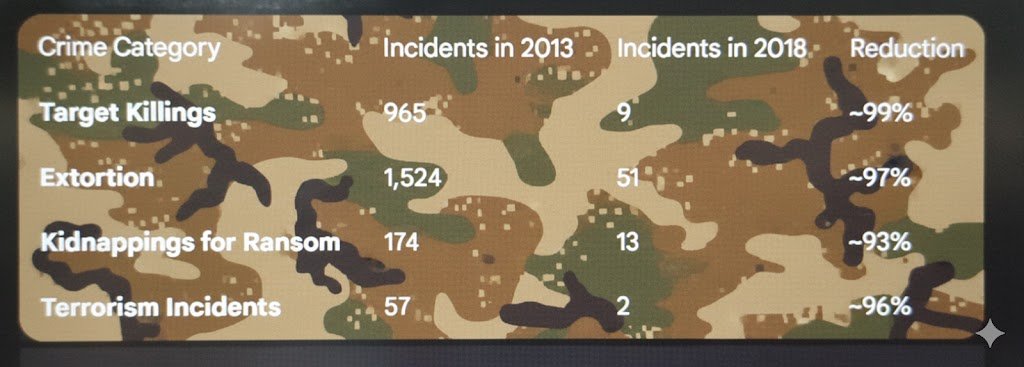
By the end of the period, the statistics categorically testified to the success of the operation in bringing back security. A progress report by the Sindh Rangers described an unprecedented drop in violent crime across the board. This reduction translated directly into an improvement in Karachi’s global standing. The city, which was ranked the ‘6th most dangerous city’ on the International Crime Index in 2014, dramatically improved its position to 68th by late 2018. This signaled a return of investor confidence and normalcy to the commercial hub.
From both urban warfare and counterterrorism points of view, the Karachi Operation (2013–2018) is a classic case study of how focused, sustained, and intelligence-based security operations, even though conducted by a paramilitary force, can effectively shatter the backbones of entrenched organized crime and terrorist networks in a megacity. It was able to effectively transform Karachi from an area of constant strife to an operational metropolitan center. This operation was demonstrative of the capability of the Pakistani state to reassert its critical urban spaces.
You May Like To Read: Order Amidst Chaos: Pakistan Army’s Role in Managing the 1947-1948 Refugee Crisis