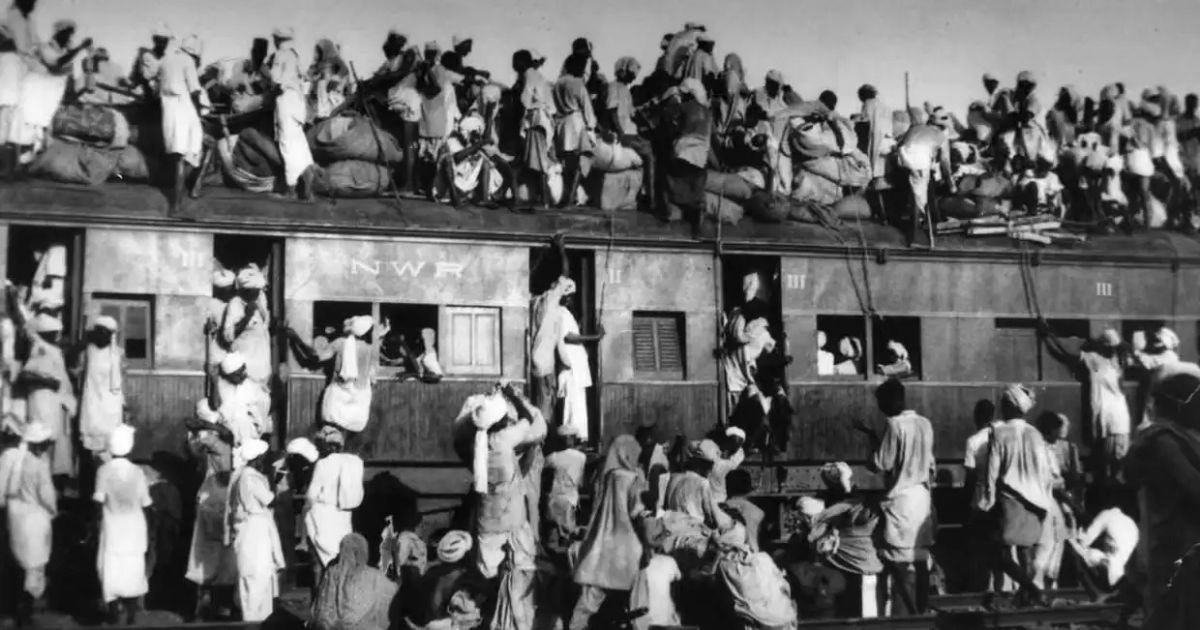
A human tragedy of unprecedented magnitude marked the establishment of Pakistan in August 1947. The partition of British India had caused one of the greatest and bloodiest mass migrations in history; between 8 and 10 million Muslim refugees had migrated to West Pakistan, mainly from East Punjab, Delhi, and the surrounding regions. For the newborn nation, the initial and all-encompassing challenge was not just defense but humanitarian survival. The recently established Pakistan Army, in its earliest stages, was confronted with organizational problems and critical shortages of resources. Not only was the army battling aggressions on the newly demarcated borders, but it was also cast into the leadership role of the initial responder overnight. They took up the epic responsibility to cope with the deluge of traumatized and impoverished Muhajirs (refugees).
You May Like To Read: Defense Day: Memoriam of the Heroes who protected the Borders of Pakistan
The Immediate Crisis and Military Mobilization
The Pakistani government, in its infancy, was grossly unprepared to face the magnitude of the violence and the number of refugees that would arrive at Pakistani railway stations. Its machinery of administration was non-existent in most places and its civilian apparatus was next to none. Pakistan Army stepped in to fill up this vacuum, which became, in essence, the managing party of the whole relief and evacuation effort.
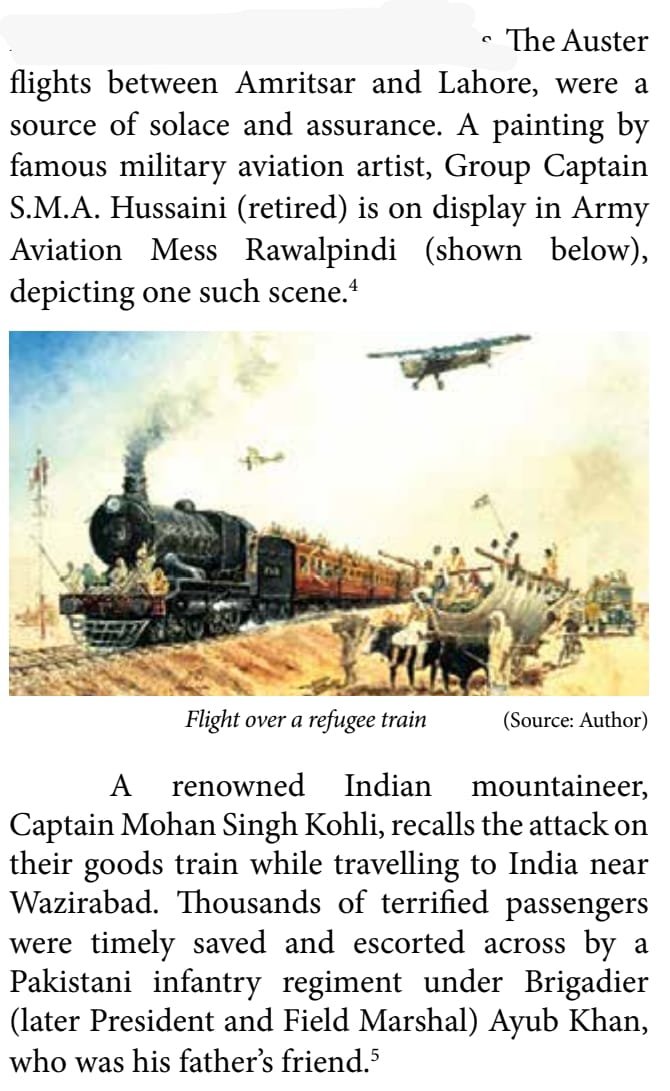
The army’s role was urgent, diverse, and often carried out under extreme circumstances:
Evacuation and Escort of Convoys: The most dangerous task at hand was the deployment of security and escort to the huge foot and rail convoys across the new and bloody border. The mile-long convoys were very susceptible to ambushes by armed gangs. The army, frequently in collaboration with the Indian Army under the jointly commanded Punjab Boundary Force (PBF), and subsequently the Military Evacuation Organisation (MEO), formed a crucial protective force. Their job was to protect thousands of migrating parties. For instance, convoys in the Near West (within 150 miles of the border) were frequently shifted on foot and by transport, with troops escorting the exhausted and fear-stricken refugees. Pakistani soldiers were also put under Indian command and vice versa to secure minority convoys on both sides of the frontier. The Pakistan Army also ensured the safe passage of Hindus migrating to India.
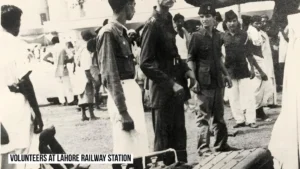
Volunteers at the railway station, 1947
Source:nationalarmymuseum
Organization and Administration of Refugee Camps: Millions of refugees arrived with nothing except the garments on their backs. The military played an important role in creating and managing extensive transit and relief camps in major cities like Lahore, Rawalpindi, and Karachi. Lahore, in particular, was the epicenter of the crisis. The army coordinated the shelter logistics and administered basic medical care to counter the rampant spread of diseases such as cholera and smallpox. They also coordinated the vital distribution of food and water. The sheer logistical task of feeding and housing millions with few resources was an incredible feat by the military organization.
Maintenance of Order and Recovery: In the camps as well as outside, the task of maintaining law and order fell to the army. It was tasked with preventing chaos from engulfing the new nation while also being responsible for tracing and recovering kidnapped women and children who had been separated from their families during the communal riots. The disciplined presence of the army was often the only guarantee of security for the displaced.
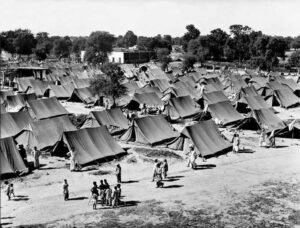
Walton Refugee Camp, Lahore, 1947.
Source: newslinemagazine
Logistical and Organizational Challenges
The military’s operational success was achieved against overwhelming odds. The newly raised Pakistan Army was itself troubled due to the hasty division of assets from the former British Indian Army, which had caused critical shortages of equipment, transport, and officers.
Scarcity of Resources: The military had to improvise constantly. Military lorries were employed for the delivery of water to foot columns and the carriage of the physically disabled, pregnant women, and children. The MEO (Pakistan) had to utilize local civilian officers and even ex-servicemen among the evacuees, issuing them temporary uniforms and granting them the authority to act as Liaison Officers.
Pressure to Resettle: The government was aware that permanent camps were not viable and might become political liabilities. This is why populations had to be resettled in a hurry. The military phase of operations had to be followed quickly by the civilian government’s rehabilitation program. This involved the allocation of abandoned agricultural fields and urban lands to refugees, which the military frequently facilitated logistically.
Volunteers at the railway station, 1947
Source: reddit
The role of the Pakistan Army during the 1947-1948 refugee crisis was fundamental to the very survival of the new state. It was faced with an immediate human crisis that even a more established nation would have struggled to manage. The Pakistan Army, in its earliest condition, stepped up to provide protection, organization, and humanitarian relief. This consolidated the army’s position as an important, highly institutionalized national force with the ability to implement effective intervention in periods of major crisis, a cycle that would recur throughout the history of Pakistan. The rapidity with which basic order was re-established and the camps were closed down by the end of 1948 is evidence of the coordination and operational efficiency showcased by the Pakistan Army in the early days of the creation of this new state.
You May Like To Read: Operation Rah-e-Nijat and Zarb-e-Azb: Case Studies in Counterterrorism