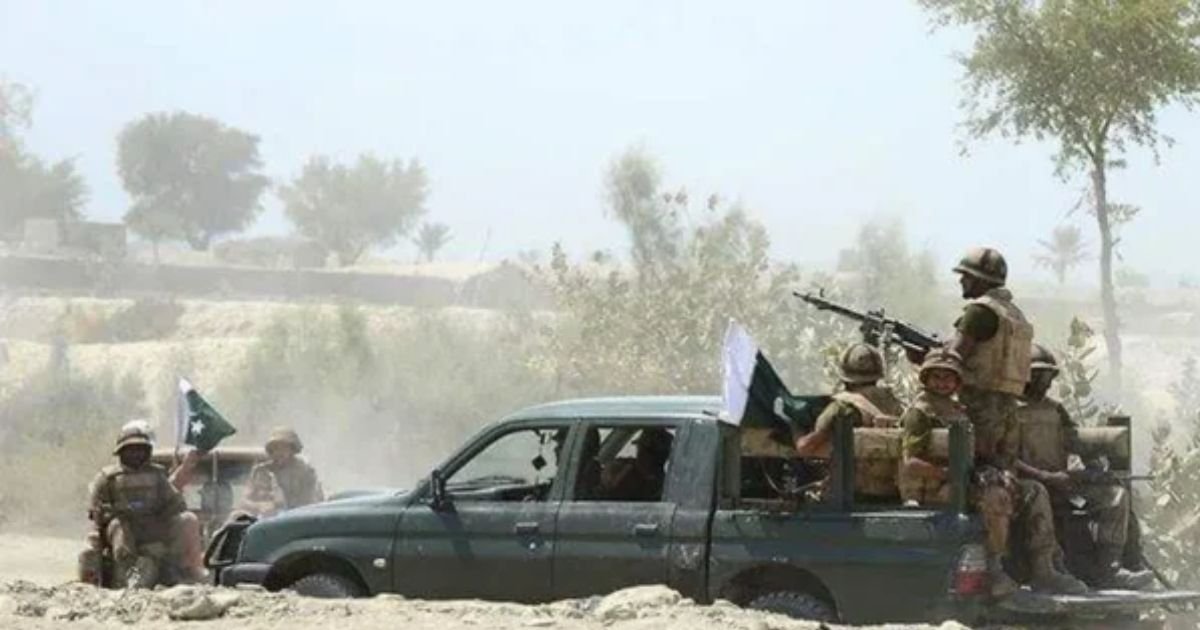
In late January 2025, Balochistan was struck by unprecedented coordinated attacks on several different districts, including Quetta, Gwadar, and Mastung, involving gunfire and suicide bombings. The outlawed Baloch Liberation Army (BLA) claimed responsibility for the attacks, referred to as “Operation Herof 2.0”, which were intended to target security forces, Chinese projects, and civilians. Pakistan’s military and police responded with an on-the-spot intelligence-based counter-offensive and started Operation Radd-ul-Fitna 1. In about 40 hours of fighting, security forces killed about 145 militants, the highest such toll in decades. Balochistan’s Chief Minister Sarfraz Bugti stated that some Afghan nationals were among the slain militants (also known as “Fitna al-Hindustan” by Islamabad). In this rapid reaction, the Army successfully blocked attacks on key installations, i.e., the Headquarters of Frontier Corps, police stations, and a high-security prison in Quetta, to disrupt the plans of militants to capture hostages or overrun the Red Zone of Quetta.
🚨🚨🚨#ISPR
Rawalpindi, 31 January, 2026On 31 January 2026, #India sponsored terrorists Fitna al Hindustan attempted to disturb the peace in #Balochistan, Pakistan, the terrorists carried out multiple attacks around Quetta, Mastung, Nushki, Dalbandin, Kharan, Panjgur, Tump,… pic.twitter.com/vT2F7D8VGD
— Pakistan Armed Forces News 🇵🇰 (@PakistanFauj) January 31, 2026
Threats Escalate, Security Forces Hold
The attackers adopted complex tactics. Reports describe gunmen dressed as civilians infiltrating hospitals, markets, and schools before opening fire; militants even used children as human shields. Suicide bombers, of whom two were reportedly women, stormed guarded checkpoints and government offices. Sabotage was also involved in the attack. Militants sabotaged national infrastructure by burning railway tracks and blowing up a high-voltage power pylon. An attempt to invade the core installations of Quetta (Red Zone) was thwarted by the vigilant troops. These tactics reveal an insurgency that will attack anything from civilian gatherings to strategic targets. Due to these attacks, the mobile network was suspended across Balochistan. Pakistan’s Defense officials point out that such attacks are frequently linked to outside sponsors (Indian-backed) for disrupting the stability of Balochistan.
In the face of this onslaught, the role played by the Pakistan Army was decisive. Troops and paramilitaries worked in very close coordination with intelligence, thwarting dozens of militant plots. Bugti and other officials praise the security forces for “swiftly repelling” the assaults, citing pre-emptive action based on intelligence. According to the statement, the military has made all attempts to prevent militants from seizing any city or major facility. Defense Minister Khawaja Asif said that two of the attacks had been carried out by female suicide bombers, signaling the changing nature of the threat.
Throughout these operations, the Army emphasized its sense of patriotism and sovereignty to defend the territory and people of Pakistan. Field Marshal Asim Munir, for example, has stressed that any violation of Pakistan’s territorial integrity should be met with a “strong and decisive” response. Pakistani military statements reiterate that the armed forces are “fully committed to protecting the lives and well-being of citizens” and will hunt down terrorists relentlessly. In speeches and press conferences, senior officers have emphasized the point that the defense of Balochistan is part of the whole national security. Army messaging has said that the campaign is not just a matter of counter-terrorism, but also transnational stabilization, bringing peace to a province long-plagued by insurgents.
Development as a Pillar of Stability
These security efforts are taking place in the larger context of the development and integration of Balochistan. Pakistan’s leadership sees a direct relationship between stability and uplift. Field Marshal Asim Munir recently emphasized the “strategic importance” of Balochistan and demanded a people-centered development approach. During his visit to Turbat and Islamabad in August 2025, the COAS met civil authorities and again reiterated the support of the army for socio-economic projects in the province. Official statements emphasize good governance, infrastructure, and local empowerment as immutable expressions that, in the words of Field Marshal Asim Munir, the military stands “shoulder to shoulder with the people of Balochistan in their pursuit of peace, prosperity, and sustainable development”. Development plans involve new roads, new schools, health care, and resource-sharing agreements. Indeed, recent provincial budgets and CPEC (China Pakistan economic corridor) initiatives allot huge funds for the uplift of Balochistan. The army realizes that economic security is national security, and protecting investments in mining and ports requires defeating terrorism. Civil-military coordination has been present: for instance, joint government-military workshops in Pakistan on Balochistan are well-reported by the media, and systematic crackdowns on smuggling and criminal activity that support insurgency.
Field Marshal Syed Asim Munir #COAS & CDF of #Pakistan
🔴You really think 1,500 BLA terrorists can take away Balochistan from us ?
Not even there next ten generations can take #Balochistan from us!#AsimMunir #PakistanArmy #ISPR pic.twitter.com/oVae9yiLTj
— Pakistan Armed Forces News 🇵🇰 (@PakistanFauj) February 1, 2026
Conclusion
The operations in January 2026 decided the role of the Pakistan Army in frontline counter-insurgency and defense against the state. By eliminating more than 140 militants in a compressed 40-hour campaign, the army and its partners had demonstrated tactical resolve as well as the effective use of intelligence. This decisive action and the promise to carry on security sweeps are couched in the context of protecting all citizens and safeguarding national integrity. At the same time, the authorities in Pakistan repeat that military action must be accompanied by efforts to address the grievances of the Balochistan people. High-level statements and budgets reaffirm an orientation towards socio-economic integration: Baloch communities are to be allies for the peace, not bystanders to violence. In this way, Pakistan emphasizes its sovereign right, indeed obligation, to defend its people and also sends signals about the fact that the long-term stability of Balochistan will be based on a combination of tough security and broad-based development.
You May Like To Read:
- U.S. Approves $686M F‑16 Upgrade: Revival of Defense Ties or Strategic Balancing Between Washington and Beijing?
- Commemoration of Sowar Muhammad Hussain Shaheed, Nishan-e-Haider
- Projecting Air Power Partnerships: Pakistan’s Role in Multinational Air Exercises and Regional Security Frameworks (Spears of Victory-2026)