Record Recruitment and Opening Roles
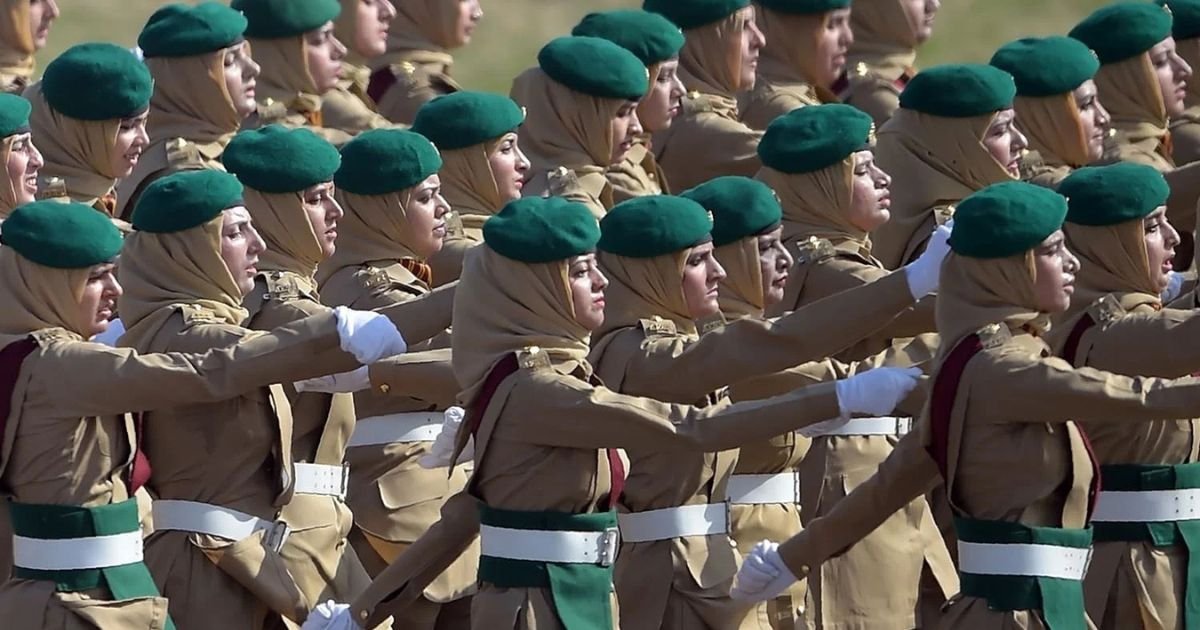
By late September 2025, parliament was informed that 80 percent of posts in the Pakistan Army are currently open to women. Over 5,000 women entered the Army, and approximately 700 became officers in branches such as medical, supply, signals, IT, and education during the last three years. Female soldiers are still prohibited from occupying only a limited number of high-endurance combat jobs, those requiring extreme physical endurance or long-term exposure to hostile environments. These milestones are historic milestones in the defense policy of Pakistan.
Security Impact and Modernization
Practically, this increased force of women boosts manpower in necessary support sectors and frees up men for combat duties. According to analysts, different forces are better suited to specialized tasks, including technology and intelligence. Top officials emphasize that female soldiers have performed commendably, working with dedication and professionalism alongside their male counterparts. The Pakistan Army also enjoys international recognition.
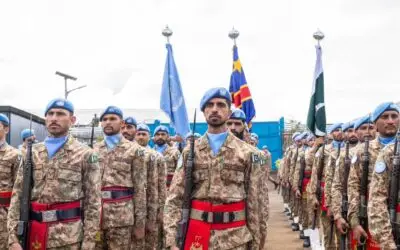
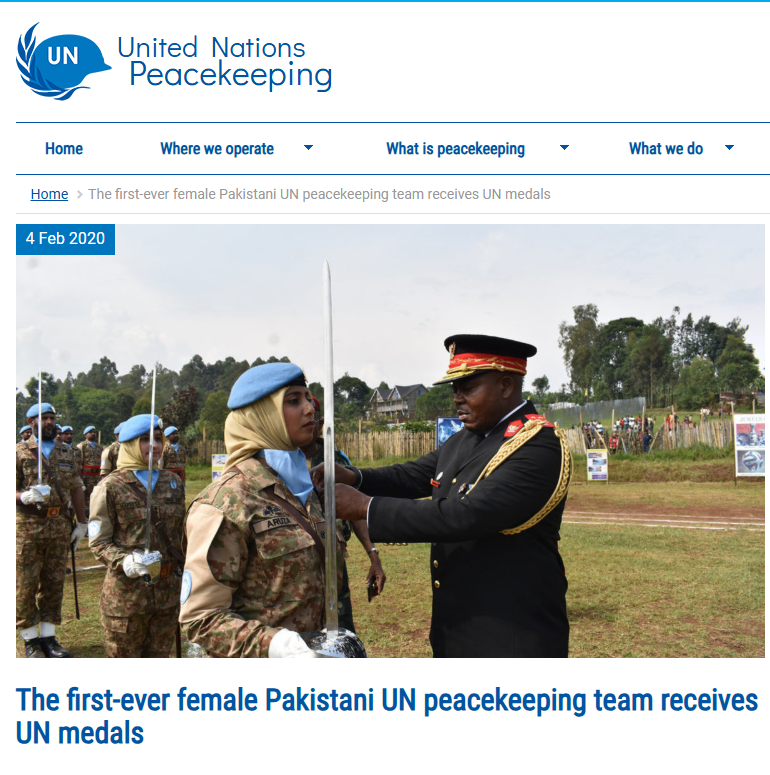
The force currently fulfils the UN gender targets in peacekeeping. In 2020, an all-female Pakistani team was sent to the Congo as the first all-women team in Pakistan to undertake a UN mission. International peacekeeping teams demonstrate the pay-off. The all-female engagement teams and increased female involvement in the missions of the UN have empowered the local outreach and protection efforts in Pakistan. UN peacekeeping and UN Women research confirm that women serve as operationally valuable in community participation, civilian protection, and intelligence collection when cultural access is important. These accomplishments add to the reputation of Pakistan as a modernizing nation where the talents of its women are appreciated.
Source: UN Peacekeeping
Historical Milestones and Pioneering Officers
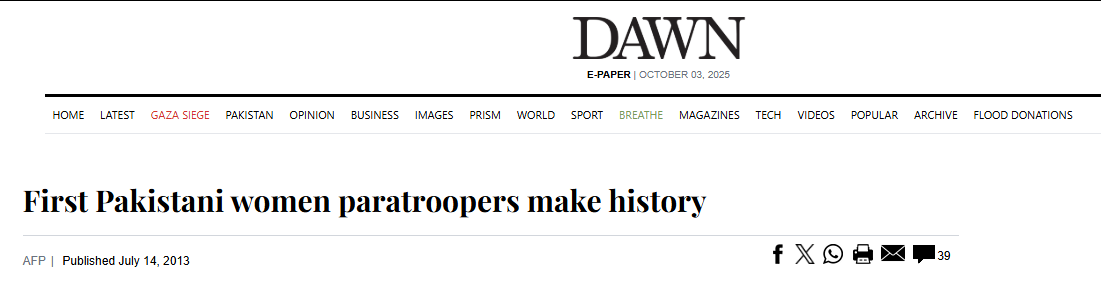
In Pakistan, women have been making their mark in the defense forces for decades. This was highlighted in 2013 when the Pakistan Army achieved a historic milestone with 24 women officers successfully completing their first Lady Paratroopers Course at the Parachute Training School in Peshawar. Captain Kiran Ashraf was named the top paratrooper among them, and Captain Sadia became the first female officer to jump from a MI-17 helicopter during training. This marked a significant breakthrough in airborne operations.
Source: DAWN
The other significant pioneer is Lt Gen Nigar Johar of the Army Medical Corps, who became the first woman in the history of the Pakistan Army to be promoted to the rank of Lieutenant General. She has worked as the Surgeon General and the Commandant of the Pakistan-Emirates Military Hospital in Rawalpindi. She is not the only woman to become a Major General: others who have achieved this rank include Shahida Malik, Shahida Badsha, Shehla Baqai, and Shazia Nisar. Together, they have redefined what female service members can do.
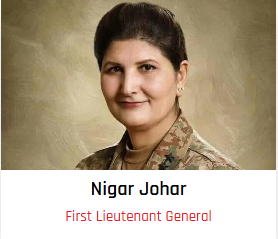
Source: Defense For Peace
Major General Nigar Johar, HI (M) promoted as Lieutenant General.
She is the 1st female officer to be promoted as Lieutenant General. The officer has been appointed as 1st female Surgeon General of Pak Army. Lieutenant General Nigar Johar hails from Panjpeer, District Swabi KPK. pic.twitter.com/ytw8YvSz76— DG ISPR (@OfficialDGISPR) June 30, 2020
Institutional Reforms and Limitations
Career-management and recruitment policies related to female personnel have been introduced in the Army. The standards of training are similar, where necessary. Women are taking a lot of the same courses as men, and more are being sent abroad to receive further training. These also enhance professionalism and establish more definite promotion opportunities.
Limits, however, exist at the same time. Combat arms such as infantry, special forces, and armor still demand physical thresholds the Army considers unsuitable for broad female service. Commanders argue unit readiness must not be compromised. The result is a mixed model: broad inclusion in support and technical fields, selective opening of combat-adjacent roles, and continued restrictions in the most demanding front-line niches.
You May Like To Read: Pakistan’s Military Modernization: New Missile Tests, Rocket Force Command & Sovereignty Doctrine
Navigating Socio-Cultural Resistance
Families tend to consider the security, honor, and marriage opportunities when a daughter wants to pursue a career in the Army. Conservative opinion-makers employ selective anecdotes to raise doubts. Certain media constructions diminish women soldiers to ethical discourses.
Yet attitudes are shifting. Female success in the Army is encouraged by promoting achievements through parades, media publicity, and high-profile assignments, redefining the military service as national service. Leadership emphasizes a sense of duty, professionalism, and Islamic values that do not exclude women as leaders. Traditional resistance is weakened over time through performance in the field and consistent career advancement. The field work by UN Women demonstrates that established career paths and community outreach minimize social friction and enhance acceptance in the family.
“Pakistani women contributed immensely 4 glory & honour of our nation. They are also @ forefront against COVID. Women in uniform have proved their mettle by contributing copiously in diverse fields serving the nation & humanity. They deserve our immense respect & gratitude” COAS
— DG ISPR (@OfficialDGISPR) March 8, 2021
Practical measures help too. The Army makes investments in isolated housing, women medical personnel, and gender sensitive training modules. It encourages visible role models—doctors, paratroopers, commanders—therefore, communities are exposed to what works. With time, social stigma is undermined by groundwork performance and constant promotions. These measures turn skepticism into silent acquiescence and, to a greater extent, into pride.
#ISPR
Pakistan Female Peacekeepers Recognised for their ProfessionalismTwo Pakistani Female Peacekeepers: Major Sania Safdar (served in UN Peacekeeping Mission Cyprus) and Major Komal Masood (served in Central African Republic) have been recognized for their outstanding… pic.twitter.com/RvoIRwgASX
— Pakistan Armed Forces News 🇵🇰 (@PakistanFauj) September 19, 2024
Operational Trade-Offs
Mixed units need investment. Uniforms, equipment, and barracks have to be modified. Gender sensitive modules should be used in training pipelines. Short-term costs are real. But the long-term dividends are larger. More women in cyber, signals, and medical services enhance operational capacity. Wider recruitment limits manpower shortage. Gender balance enhances civil-military relations in conservative regions, as female populations are more accessible to women than men. That minimizes intelligence blind spots.
Conclusion
The policy of Pakistan has been cautious and nationalistic. It balances preparedness with social reality, modernizes the Army, and highlights the role of women in their households and other areas. Gender-smart force modernization should be institutionalized in Pakistan. This means the government needs to invest in recruiting and training gendered forces and improving infrastructure to ensure the Army can increase the role of women without undermining preparedness.
You May Like To Read: Coastal Exercises of Pakistan Navy near Sir Creek: Meaning and Strategic Indication