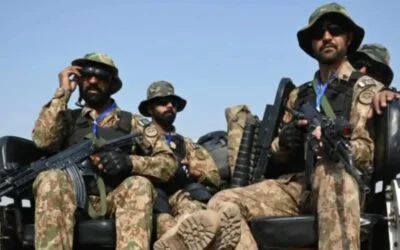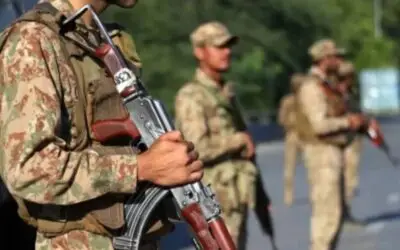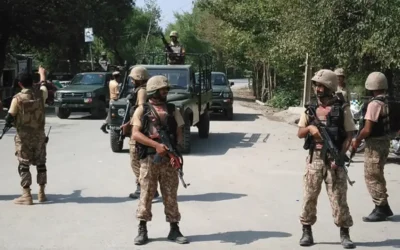
BANNU / PESHAWAR — As of April 2026, the Bannu Division has emerged as a central theater for Operation Azm-e-Istehkam (Resolve for Stability). The region, which includes the districts of Bannu, Lakki Marwat, and North Waziristan, is currently under an intensified security umbrella following a significant surge in cross-border militancy and the breakdown of previous regional ceasefires.
🚨#ISPR
Rawalpindi, 02 April, 2026On 1 April 2026, movement of a group of khwarij along #Pakistan–#Afghanistan border in North Waziristan District was picked up by the security forces.
Our troops effectively engaged this group of khwarij. As a result of precise and skillful… pic.twitter.com/asUko0uyuj
— Pakistan Armed Forces News 🇵🇰 (@PakistanFauj) April 2, 2026
Current Operational Status
-
From Kinetic to Intelligence-Based: While the federal government initially clarified that Azm-e-Istehkam is not a “large-scale displacement-style” operation like Zarb-e-Azb, the Bannu Division has seen a 40% increase in Intelligence-Based Operations (IBOs) since January 2026.
-
Targeting “Fitna al Khawarij”: Operations are primarily focused on neutralizing the command structure of the banned TTP (state-designated as Khawarij), particularly those operating from the Janikhel and Bakka Khel buffer zones.
-
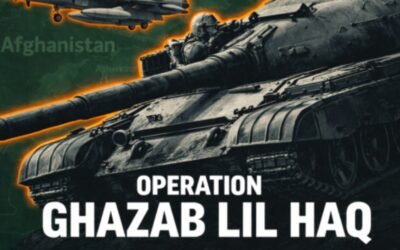
Operation Ghazab lil-Haq Integration: Following the February 2026 escalation, local operations in Bannu are now tactically linked to the broader border offensive, aiming to cut off the “rat-running” routes used by militants entering from Afghanistan’s Khost and Paktika provinces.
On 29 Jan 2026, #Pakistani security forces killed 41 terrorists in two separate intelligence-based operations (IBOs) in #Balochistan under Operation Azm-e-Istehkam.
Operation 1 – Harnai District:
– 30 terrorists from Indian-sponsored Fitna al Khwarij neutralized
– Large cache of… pic.twitter.com/Yu24SuNmKt— Sohail Ahmed (@sohailahmedsa) January 30, 2026
Recent Combat Engagements
The first quarter of 2026 has been marked by high-intensity engagements between the Counter-Terrorism Department (CTD), the Frontier Corps (FC), and militant factions:
-
The Mirakhel Strike (January 2026): CTD SWAT teams neutralized two “most-wanted” target killers, Suhail Khan (alias Sangri) and Ismail (alias Usman), in the Jhandokhel area. These individuals were linked to several IED attacks on police check posts.
-
High-Level Sacrifice (February 2026): In a major IBO in the Bannu suburbs, a Lieutenant Colonel and another soldier were martyred while successfully eliminating a high-value militant commander.
-
The March 30 IBO: Just 72 hours ago, security forces killed three terrorists in an IBO within the Bannu district, recovering a cache of “sophisticated foreign-made weaponry” left behind by NATO forces in Afghanistan.
Infrastructure & Socio-Economic Dimensions
A core pillar of Azm-e-Istehkam is “Security through Development.” However, the security situation has hampered progress:
-
The “Safe City” Project: Efforts to install high-tech surveillance in Bannu City have been fast-tracked to prevent motorcycle-rigged IED attacks, similar to the recent blast in Serai Naurang.
-
Impact on Education & Health: Recurring “sanitization operations” in the rural periphery have led to temporary closures of schools, though the military’s “Social Support Programs” are attempting to maintain polio vaccination drives under heavy guard.
The “Political-Terror Nexus” Challenge
During a landmark press conference on January 6, 2026, the DG ISPR emphasized that the surge in Bannu and Lakki Marwat is partly fueled by a “political-terror nexus.” Consequently, current operations are not just kinetic but also involve a crackdown on local facilitators and illegal funding channels (hawala/hundi) that sustain militant sleeper cells in urban centers.
Strategic Outlook
The “open war” declared by the Ministry of Defense in March 2026 means that the Bannu Division will remain a High-Alert Zone for the foreseeable future. While security forces have successfully “degraded” several TTP modules, the persistent threat of IEDs and the use of Afghan soil as a “launchpad” remain the primary hurdles to achieving the “Stability” promised by the operation’s name.
You May Like To Read: Security Forces Neutralize 8 Terrorists on North Waziristan Border
Check out our latest video: