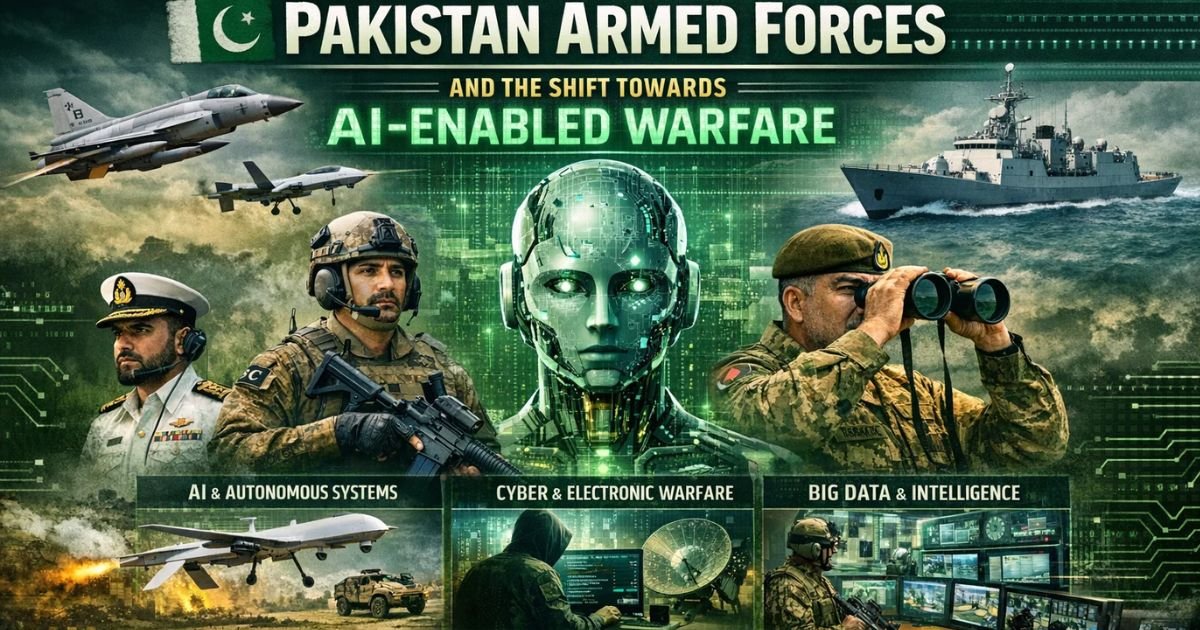
Artificial intelligence is emerging as a fundamental aspect of today’s military capability. Pakistan is pursuing this transformation under direct policy and institutional planning. The armed forces are incorporating new technologies to improve their capacity to deter and act effectively. Recent national initiatives and military exercises provide indications of preparing for future warfare while keeping a defensive strategic posture.
National Artificial Intelligence Policy and Strategic Technology Initiatives
Pakistan has launched a national initiative to help with the faster adoption of artificial intelligence across the sectors. The federal government’s breathtaking backbone is the 2026 Indus AI Week in Islamabad, formally marking a pledge to the Indus integration via artificial intelligence as a national commitment. The initiative includes policy dialogues, industry showcases, and strategic dialogues to enhance and expand Pakistan’s AI ecosystem.
Indus AI Week 2026 🤖💻 is the government’s way of saying, AI belongs to everyone. Students, professionals, creators, founders, and citizens will all be part of a week that makes advanced technology easy, useful, and exciting.🌍 Weldone & Thank You Mr. Prime Minister🇵🇰👏🏻@ShazaFK pic.twitter.com/rSnyAMyYe0
— PakistaniPeeps🇵🇰 (@pakistanipeeeps) January 16, 2026
At the Indus AI Summit, the Prime Minister announced a US $1 billion commitment to developing AI by 2030. This is an important commitment that shows the importance of AI for National development and security. Pakistan is positioning itself to harness the power of AI in a responsible manner and ensure that AI tools play a role in building the country’s resilience.
“I am pleased to announce that the government of Pakistan is committed to invest $1 billion in AI by 2030, which will go a long way in building AI ecosystem in our country. Second, AI curriculum will be introduced not only in all federal schools, but also all schools of AJK,… pic.twitter.com/PHgD8JXjU9
— Government of Pakistan (@GovtofPakistan) February 9, 2026
AI in Defense Technology and Training
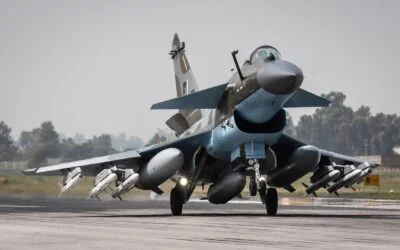
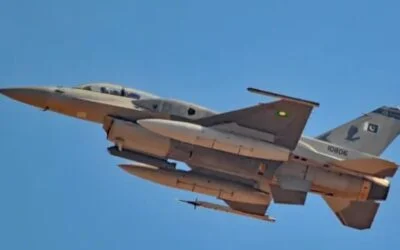
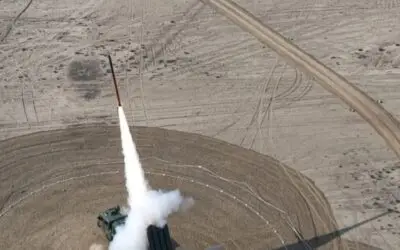
The Pakistan Air Force conducted the Golden Eagle exercise in February 2026 with a focus on AI-enabled and network-centric operations. According to the military’s media wing, ISPR, this exercise brought artificial intelligence (AI) tools into an integrated system along with the traditional assets. The training was showing manned-unmanned teaming in contested environments.
PAKISTAN AIR FORCE DEMONSTRATES COMBAT READINESS IN SOUTHERN ZONE
10 February, 2025: Pakistan Air Force successfully conducted Exercise Golden Eagle in the Southern Air Command’s area of responsibility, involving the synchronized orchestration of the complete combat potential at… pic.twitter.com/8wchjd1IJs
— DGPR (AIR FORCE) (@DGPR_PAF) February 10, 2026
AI-enabled systems were able to process the information very quickly from multiple sensors. This improved the targeting and coordination in real-time. These capabilities augment human decision-making. This ensures that Pakistan’s air power is competitive and robust. AI integration, therefore, becomes a beneficial and feasible part of modern defense training.
Multi-Domain Operations and Artificial Intelligence Integration
Pakistan’s armed forces are conducting multi-domain operations through a multi-level integration of AI in air, land, and cyber domains. AI-enriched analytical tools assist commanders in analyzing the data on the battlefield more quickly and accurately. This provides support for fast decision cycles. This responsiveness is very important in complex threat environments. AI systems are helpful with risk evaluation and the distribution of resources.
The integration of AI also supports the concepts of network-centric warfare. There is a flow of information across platforms and across services. Shared situational awareness enhances a coordinated and faster tempo of operations. Such an approach is consistent with Pakistan’s broader move towards tech-led force integration.
Cyber and Electronic Warfare Capability
AI is playing an increasing role in cyber defense activities as well as electronic warfare. Automated security systems examine the network activity for anomalies. These types of systems are used to identify potential threats and provide for rapid mitigation. This ability enhances the cyber resilience of Pakistan. It defends important military communications channels.
AI-assisted electronic warfare tools improve spectrum control. These are the tools to identify and suppress the hostile signal interference. Enhanced AI capabilities lead to improved Pakistan’s capacity to safeguard vital infrastructure. This ensures a continuity of command and operational integrity.
Indigenous Development and National Autonomy
Pakistan focuses on the development of indigenous technology to achieve strategic autonomy. Defense tech showcases at Indus AI week included local systems made for drone navigation as well as autonomous platforms. These tools represent the collaboration of the military and domestic innovators.
Relying on the domestic development of AI lowers the dependence on foreign technology. This makes the nation more resilient and secure in sensitive data. It also supports a growing tech ecosystem locally, which plays a role in the country’s defense objectives.
Deterrence Stability in the Age of AI
The shift towards AI-enabled warfare does not alter the defensive posture of Pakistan. AI helps increase operational efficiency while it contributes to deterrence stability. These tools make military operations more precise and also less prone to friction. They enable the armed forces to counter threats with higher accuracy.
The strategic focus of Pakistan is still on national defense and regional stability. AI-enabled systems make a contribution to these aims. They facilitate readiness and do not promote escalation. AI thus improves Pakistan’s capacity to keep the peace with strength and professionalism.
“AI does not replace human intelligence, but it penalizes countries that fail to develop it. That is why Pakistan’s most important AI investment is not hardware; it is its people.
Uraan-Pakistan aligns education reforms, digital and AI skills, industry demand and… pic.twitter.com/QE2NVlmekW
— Government of Pakistan (@GovtofPakistan) February 9, 2026
Conclusion
The military forces of Pakistan are embracing artificial intelligence as a force multiplier. This move supports multi-domain operations and cyber resilience as well as joint command capabilities. Indigenous development guarantees autonomy and resiliency as a strategy. AI-powered warfare increases the stability of deterrence. In this way, Pakistan’s defense transformation is measured, evidence-based, and geared to national security priorities. These efforts place Pakistan in a position to cope with the challenges of modern and future warfare.
Artificial intelligence integration also demonstrates institutional maturity and long-term planning. Pakistan is adopting technology in a controlled and responsible way. The objective is still deterrence and stability, and not escalation. This type of approach promotes national security while contributing to regional balance in South Asia.
You May Like To Read:
- Balochistan Security Operations: Pakistan Army at the Frontline of Counter-Insurgency and Internal Stabilization
- Turkey-Pakistan Defense Collaboration: Are Joint Industrial Projects Reshaping Pakistan’s Long-Term Military Autonomy?
- Tri-Service Integration Address: Assessing the Strategic Vision Behind Pakistan’s New Defense Command Architecture