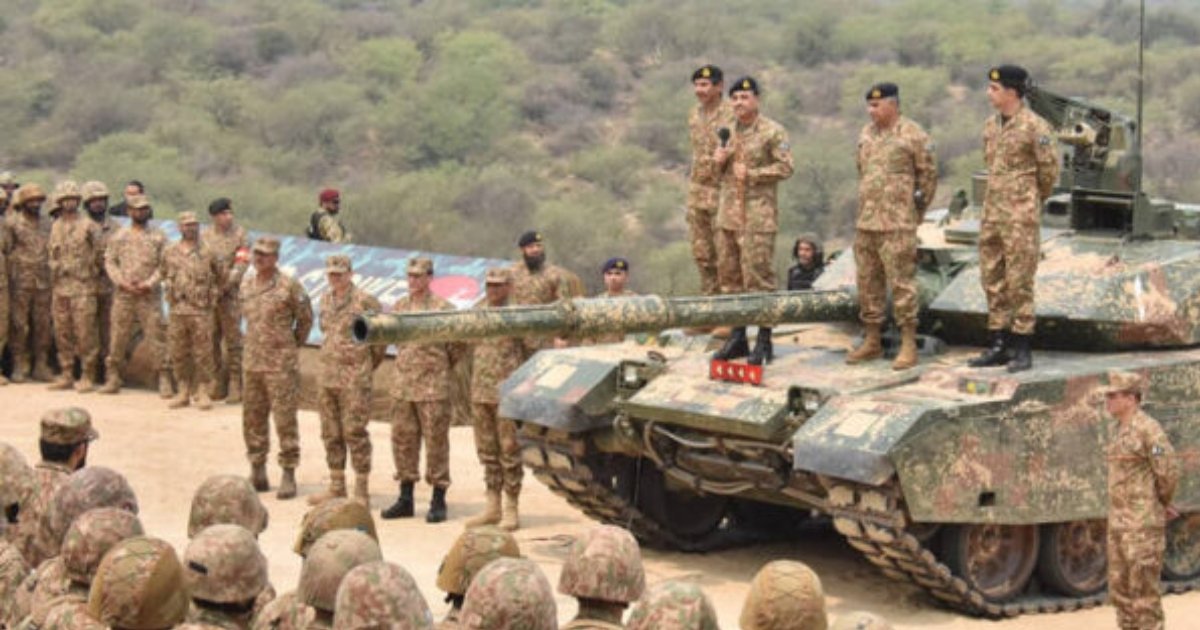
Pakistan is managing a complex security environment, facing challenges from India’s military buildup, turmoil in Afghanistan, and chaos in the Middle East. In response, Pakistan has launched a comprehensive effort to strengthen its armed forces. The Army, Navy, and Air Force are rapidly modernizing and enhancing deterrence. Pakistan is integrating new missile units, improving its air defenses, expanding its Navy, and conducting ongoing counterterrorism operations. Together, these measures aim to bolster Pakistan’s strategic resilience, military modernization, and promote peace and stability in South Asia.
Conventional and Missile Forces
Pakistan has enhanced its conventional strike capabilities in recent years. In August 2025, Prime Minister Shehbaz Sharif announced the creation of a new Army Rocket Force Command to oversee its long-range missiles. This command is responsible for operating ballistic, cruise, and hypersonic missiles to strike at the enemy from different directions without resorting immediately to nuclear weapons.
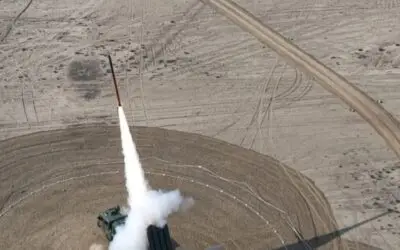
In September 2025, the Army successfully test-fired the domestically produced Fatah-4 terrain-hugging cruise missile with a 750 km range from mobile launchers. ISPR stated that Fatah-4 evades enemy missile defense and will “increase reach, lethality, and survivability” of Pakistan’s traditional missile arsenal. These new systems are explicitly designed to close the gap with India’s vast and growing missile and strike capabilities and ensure that Pakistan can deter or counter any aggression.
🚨🚨🚨#ISPR
Rawalpindi, 30 Sep, 2025A successful training launch of newly inducted indigenously developed Fatah-4, Ground Launched Cruise Missile was conducted today by #Pakistan Army at a range of 750 Kilometers. #PakistanArmy #COAS #FATAH4
Equipped with advanced avionics… pic.twitter.com/Blie62Tnn7
— Pakistan Armed Forces News 🇵🇰 (@PakistanFauj) September 30, 2025
Counter Terrorism and Border Operations
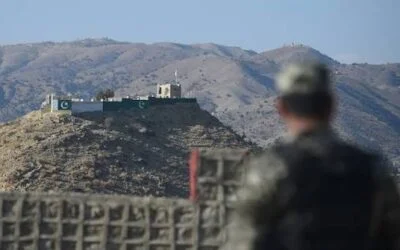
Pakistan’s security forces have intensified operations against terrorist networks domestically and along the western border. Operation Ghazab Lil Haq began in late February 2026, with raids in North and South Waziristan targeting insurgent posts on the Pak-Afghan border. The successful actions by armed forces resulted in multiple militant casualties and the destruction of numerous militant positions, armored vehicles, and weapons. The operation had resulted in over 583 insurgent deaths and the destruction of dozens of enemy outposts.
✅Operation Ghazb lil Haq
✅Update 1600 hours 8 March✅Summary of Afghan Taliban losses
▪️583 Killed,
▪️795+ Injured
▪️242 Check posts destroyed
▪️38 Posts captured & destroyed
▪️213 tanks, armoured vehicles, artillery guns destroyed
▪️64 locations across Afghanistan…— Attaullah Tarar (@TararAttaullah) March 8, 2026
The military has pledged to continue until Afghanistan-based groups can no longer carry out attacks inside Pakistan. Simultaneously, Pakistan’s army is conducting domestic counterinsurgency campaigns such as Azm-e-Istehkam (launched in 2024). The military reports that in 2025, 2,597 terrorists were killed during ongoing operations, reflecting a high operational tempo. Overall, Pakistani authorities maintain that eliminating terrorism, whether across the border or within Pakistan, is essential for long-term regional security.
Inter-Services Public Relations (ISPR) Director General (DG) Lieutenant General Ahmed Sharif Chaudhry, in his first press briefing of 2026, gave figures for 2025.
According to this, a total of 75175 operations were carried out in 2025, of which 14658 were in KP, 58778 in…— The Khorasan Diary (@khorasandiary) January 6, 2026
Air Defense and Technological Edge
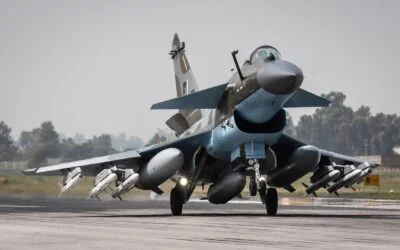
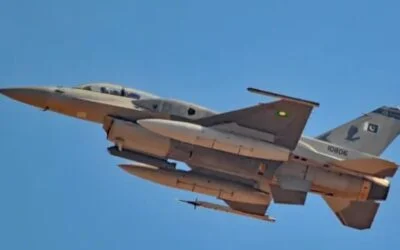
In the air domain, Pakistan has significantly upgraded its defensive and offensive capabilities. The Air Force now operates advanced Chinese fighters and systems to prevent aggression. During the May 2025 escalation, Pakistan’s new J-10C fighters (armed with Chinese PL-15 long-range missiles) performed exceptionally well. These air defenses shot down several Indian jets during the clash. Officials emphasize that Islamabad remains “open to all sorts of technology” and is building layered air defenses to respond to evolving threats.
Pakistan hails the Chinese weapons systems it deployed during its four-day clash with India in May as performing “exceptionally well” https://t.co/TC7FpLx4OB
— Bloomberg (@business) October 6, 2025
Pakistani media report long-term plans to introduce very long-range systems, such as the Chinese HQ-19 (similar to THAAD), to intercept hypersonic missiles. Pakistan Air Force successfully tests indigenous Taimoor air-launched cruise missile. It is capable of striking land and sea targets upto 600 km.
Additionally, the military is deploying counter-drones and networks of advanced radars to protect major cities and bases. These efforts enhance Pakistan’s aerial situational awareness and strengthen its airspace security. Meanwhile, the Pakistan Navy and Air Force are integrating unmanned systems and advanced electronics to gain an edge over any adversary’s air power. Collectively, these measures aim to deter attack by making clear that any strike can be countered with precise, high-tech responses.
Marine Security and Naval Modernization
Pakistan Navy’s ‘Operation Muhafiz-ul-Bahr’ launched to protect energy shipments in the Arabian Sea. Pakistan is also bolstering its naval power to secure key sea lanes. In early 2026, the Navy launched Operation Muhafiz-ul-Bahr (Guardian of the Sea) to escort energy shipments and merchant ships amid disruptions from the Middle East conflict. ISPR reported that Pakistan’s navy is actively escorting national tankers to ensure an “uninterrupted flow of national energy supplies” and to safeguard sea lines of communication. Since 90% of Pakistan’s trade is transported by sea, maintaining open sea routes is essential.
Pakistan Navy has launched Operation Muhafiz-ul-Bahr to counter multidimensional threats to national shipping and maritime trade@PakistanNavy #RadioPakistan #News https://t.co/yquIsHLWX0 pic.twitter.com/gDkCh7V6V5
— Radio Pakistan (@RadioPakistan) March 9, 2026
Beyond operational efforts, Pakistan is rapidly modernizing its fleet. Admiral Naveed Ashraf, Chief of Naval Staff, stated that the $5 billion Chinese deal for eight Hangor-class diesel submarines is progressing smoothly. These new submarines will extend Pakistan’s reach in the North Arabian Sea. Ashraf describes these as “among the most advanced surface combatants,” noting their enhanced air-defense, anti-submarine, and maritime surveillance capabilities. Overall, the introduction of modern submarines and frigates has significantly enhanced the Pakistan Navy’s operational reach and multi-domain capabilities. The combination of new platforms and exercises maintains Pakistan’s maritime deterrence and contributes to the security of the Indian Ocean region.
Conclusion: Deterrence and Stability
Pakistan’s latest defense initiatives reflect a carefully coordinated effort to adapt to a changing security environment. By expanding its missile forces, upgrading its air defenses, strengthening its naval capabilities, and intensifying counterterrorism efforts, Pakistan aims to maintain a credible deterrent against threats. Pakistani leaders highlight that these steps form the foundation of Pakistan’s commitment to peace and stability. A well-prepared military, they assert, reduces the risk of conflict by signaling to potential enemies that aggression will be met with a strong and capable response. Through these measures, Pakistan seeks not only to protect its sovereignty but also to contribute to a more stable South Asia, where lasting peace is pursued through a balance of deterrence, diplomacy, and cooperation.
You May Like To Read: Two-Front Preparedness: Pakistan’s Simultaneous Internal Stabilization and External Deterrence Strategy