Strategic Context and Doctrinal Foundation
Pakistan’s military doctrine continues to evolve in response to changing security dynamics in South Asia and beyond. Situated in an area of strategic competition and unsettled disputes, amid rapid military modernization, Pakistan has consistently refined its doctrinal framework to safeguard national sovereignty and provide credible defense. At its core, the doctrine remains grounded in the principles of credible deterrence, territorial integrity, and constitutional responsibility. However, the means by which these principles are operationalized are undergoing steady transformation.
Under the leadership of CDF & COAS FM Asim Munir, Pakistan’s armed forces have made clear that technological change and multi-domain integration are defining the future of warfare. Contemporary battlefields now span land, sea, air, cyber, space, and information domains. Doctrine now prioritizes integration across all domains of warfare. Rather than focusing on operational planning within individual services, the armed forces are developing interconnected systems that enable seamless coordination between services.
This approach supports rapid adaptation to emerging threats, whether conventional, hybrid, or asymmetric. The emphasis on joint operational coherence strengthens Pakistan’s ability to deter aggression below the nuclear threshold and enhances conventional deterrence. These changes are not reactive but part of a long-term vision aligned with national strategic priorities and constitutional principles.
Training at Kharian and Operational Readiness
Operational readiness is the practical basis of doctrine. The 9th International Pakistan Army Team Spirit Competition was held at Kharian in early February 2026, underscoring the Pakistani armed forces’ commitment to continuous professional growth. Senior military leadership reinforced the importance of the fundamentals of modern warfare. The competition focused on core soldiering skills, tactical precision, physical endurance, and coordinated team maneuvers. Such exercises foster discipline, cohesion, and operational adaptability at the small-unit level.
#ISPR
Rawalpindi, 10 February, 2026The 9th International #Pakistan Army Team Spirit (PATS) Competition successfully concluded at Kharian on 9 February 2026. The closing ceremony was graced by the Field Marshal Syed Asim Munir, NI (M), HJ, #COAS & CDF, as the Chief Guest.
The… pic.twitter.com/fQMfLVbfKK
— Pakistan Armed Forces News 🇵🇰 (@PakistanFauj) February 10, 2026
The semi-mountainous terrain of the Kharian area provided a realistic and demanding training environment. It tested participants’ ability to conduct patrols, navigate difficult terrain, and carry out mission tasks in simulated combat environments. Exposure to various operational situations promotes combat readiness and develops the ability to make decisions under stress. The exercise also fostered the exchange of ideas on small-unit tactics and modern combat techniques, including urban warfare drills and rapid-response maneuvers.
Importantly, this focus on fundamentals complements Pakistan’s overall efforts to achieve military proficiency across domains. Advanced technology and sophisticated systems cannot substitute for professional competence at the tactical level. By ensuring that soldiers are proficient in fundamental skills, the armed forces have a solid base upon which all technological integration can meaningfully build. The balance between tradition and innovation defines Pakistan’s evolving doctrine.
Integrating Technology into Doctrine
The distinguishing feature of Pakistan’s doctrinal evolution is the systematic use of modern technology. During his visit to Bahawalpur Garrison, CDF Field Marshal Munir reiterated that future wars would be technology-driven, with speed, precision, and information dominance playing decisive roles. Pakistan is therefore investing in capabilities that increase effectiveness across domains, especially in surveillance, command, control, communications, intelligence, and electronic warfare.
Command and control systems incorporate real-time information flows from a variety of platforms. This integration enables commanders to make informed decisions based on a complete understanding of the battlefield environment. Exercises such as Field Exercise Steadfast Resolves and Exercise Golden Eagle demonstrated the fielding of unmanned aerial systems operating in concert with surveillance assets and electronic warfare units. These systems provide improved situational awareness, target-acquisition capability, and force protection.
PAKISTAN AIR FORCE DEMONSTRATES COMBAT READINESS IN SOUTHERN ZONE
10 February, 2025: Pakistan Air Force successfully conducted Exercise Golden Eagle in the Southern Air Command’s area of responsibility, involving the synchronized orchestration of the complete combat potential at… pic.twitter.com/8wchjd1IJs
— DGPR (AIR FORCE) (@DGPR_PAF) February 10, 2026
Modern command structures focus on network-centric warfare, in which systems interact with each other rather than as isolated platforms. Data fusion and digital coordination enhance response speed and operational accuracy. Such integration increases preparedness for high-intensity conflict and helps address hybrid threats, including cyber intrusions and information warfare. The technological shift does not abolish traditional combat arms; it augments them to ensure that the Pakistani forces are adaptable to an age of rapid innovation.
Air-Land Integration and Joint Operations
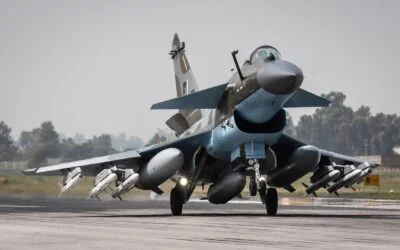
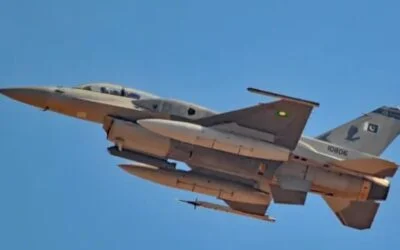
Air-land integration is an integral part of Pakistan’s evolving doctrine. Close coordination among the Pakistan Army and the Pakistan Air Force ensures coordinated operational planning and execution. Joint exercises improve targeting accuracy, reduce response times, and enhance coordination on the battlefield. This integrated approach strengthens both conventional deterrence and strategic stability.
Integrated air defense and strike frameworks allow assets to be used efficiently. Manned aircraft, unmanned platforms, and ground-based systems operate under unified control mechanisms. This synergy enhances operational flexibility and decreases the vulnerability to surprise. Through accurate air support coupled with mobile ground elements, Pakistan has increased its capacity to mount coordinated maneuvers within complex operational scenarios.
Joint operations are not limited to combat situations. Disaster response activities, counterterrorism, and border security initiatives all involve increased multi-service coordination. Such practices institutionalize interoperability and help ensure the doctrine is implemented as a practical capability. Pakistan’s doctrinal development consequently shows a holistic understanding that modern conflict requires integrated equipment across all services.
Deterrence, Stability, and Regional Implications
Pakistan’s doctrine at the strategic level focuses on deterrence and stability in the South Asian security environment. The goal is to avoid escalation and maintain a credible defense. The armed forces maintain a posture that is, on the one hand, strongly defensive and, on the other, capable of a decisive response. Clear communication of intent and demonstrated readiness help avoid the risks of miscalculation in an area of the world with complex rivalries and periodic crises.
Doctrinal emphasis on stability is in line with Pakistan’s constitutional role as a guarantor of national security. While preserving the ability to be ready to respond to high-intensity situations, the armed forces also contribute to diplomatic efforts to resolve disputes peacefully. The effectiveness of deterrence, professional readiness, and technological modernization is a part of wider regional stability.
The evolution of doctrine also indicates that Pakistan wants to develop a balancing approach between modernization and restraint. By increasing the capabilities of the conventional forces and multi-domain integration, the armed forces boost deterrence under the nuclear threshold. This approach involves dependence upon escalation and promotes a more stable strategic environment.
Conclusion
From the training grounds of Kharian to combined air operations in the skies, Pakistan’s military doctrine continues to change as per the contemporary realities. It combines technological innovation with fundamental soldiering skills, focusing on readiness in all aspects. By looking at joint operations, network-centric capabilities, and credible conventional deterrence, the doctrine adds to the secure defense of the nation, as well as the stability of the region as a whole. Rooted in the spirit of constitutional responsibility and strategic foresight, Pakistan’s armed forces are continuously ready to meet the challenges ahead today and in the future with professionalism, discipline, and flexibility.
You May Like To Read:
- Pakistan Armed Forces and the Shift towards AI-Enabled Warfare
- Projecting Air Power Partnerships: Pakistan’s Role in Multinational Air Exercises and Regional Security Frameworks (Spears of Victory-2026)
- Turkey-Pakistan Defense Collaboration: Are Joint Industrial Projects Reshaping Pakistan’s Long-Term Military Autonomy?
Check out our latest video: